 Português
  English (UK)
  Nederlands
  Français
  Español
Why So Many Ruins Remain Standing in the Tavira and Argavian Countryside
A gentle look at Algarve heritage, land rules and rural life
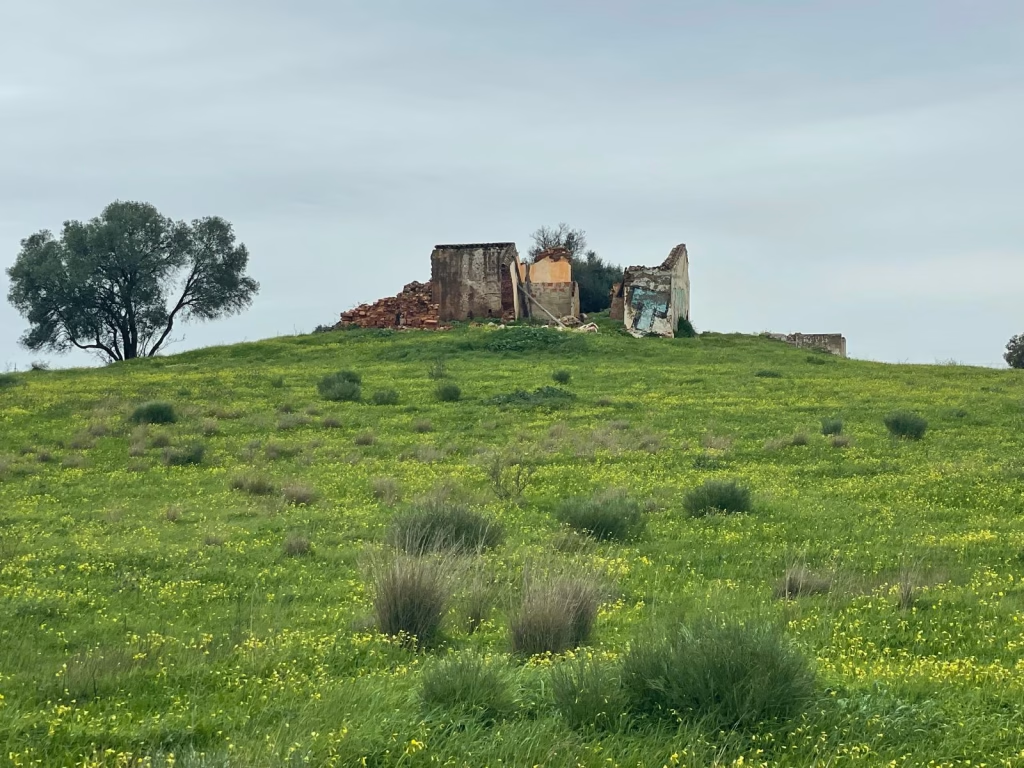
If you explore the countryside around Tavira, you will quickly notice them.
Old farmhouses without roofs. Stone walls softened by fig trees. Quiet ruins tucked between olive groves and almond orchards.
At first glance, they may seem abandoned.
But in the Eastern Algarve, these ruins are rarely forgotten. They are often carefully left standing , shaped by planning laws, protected landscapes and deep family roots.
A Ruin Often Means Legal Building Rights
In Portugal, an existing structure — even in ruins — can carry important legal value.
When a building is registered as having existed before, it may allow the owner to:
- renovate or rebuild within the original footprint
- restore a rural home where new construction would not be permitted
If a ruin is fully demolished, these rights may be lost.
That is why many landowners in the Tavira countryside leave walls standing. They are preserving future possibilities, not neglecting the land.
Renovation Is Easier Than New Construction
Across the Algarve countryside, planning authorities generally favour rehabilitation over new builds .
Restoring a traditional farmhouse or cottage is often:
- easier to license
- more in line with local planning rules
- the only option in rural zones
Building a new house on empty land — even if privately owned — is frequently restricted, especially outside villages.
Protected Landscapes Shape the Eastern Algarve
Large parts of the land around Tavira are protected under agricultural and ecological regulations. These zones exist to preserve:
- farmland
- water systems
- biodiversidade
- the open rural character of the Algarve
In these areas:
- new construction is usually limited
- existing rural buildings may be restored
Here, ruins become a bridge between people and landscape — a way to live lightly within nature.
Restoring a Ruin Takes Time and Patience
Renovating a ruin in the Algarve countryside is a long-term commitment. Owners often face:
- high building costs
- lengthy municipal procedures
- changing regulations
- archaeological surveys that can delay work
Many choose to wait until the time — and the budget — feels right. Until then, the ruin remains part of the land’s quiet rhythm.
Family Land and Shared Ownership
In the Tavira hills, land is often inherited across generations. Multiple heirs may share ownership, sometimes living far apart.
Without full agreement, restoration cannot begin.
The ruin stays — a visible reminder of family history still unfolding.
Low Property Taxes Reduce Pressure
Ruins usually come with low property taxes. Once restored, a home becomes more expensive to maintain and tax.
For many families, there is simply no urgency to change what already exists.
More Than Stone: Memory and Identity
Beyond regulations and economics, there is emotion.
Many ruins were once:
- family homes
- small farms
- places of childhood memory
Demolishing them feels final. Leaving them standing keeps history — and possibility — alive.
A Landscape That Moves Slowly
The ruins of the Tavira countryside are not signs of neglect. They reflect:
- respect for land protection
- traditional planning values
- strong family ties
- a slower approach to change
In the Eastern Algarve, time is not wasted — it is allowed.