Pego do Inferno: Tavira’s Hidden Waterfall & Its Legend

Tucked away in the countryside near Tavira lies a slice of nature legend: Pego do Inferno , or “Hell’s Pool.” Once a popular swimming spot, today it’s more of a secret pilgrimage—quiet, wild, and wrapped in mystery.


🏞️ What is Pego do Inferno?

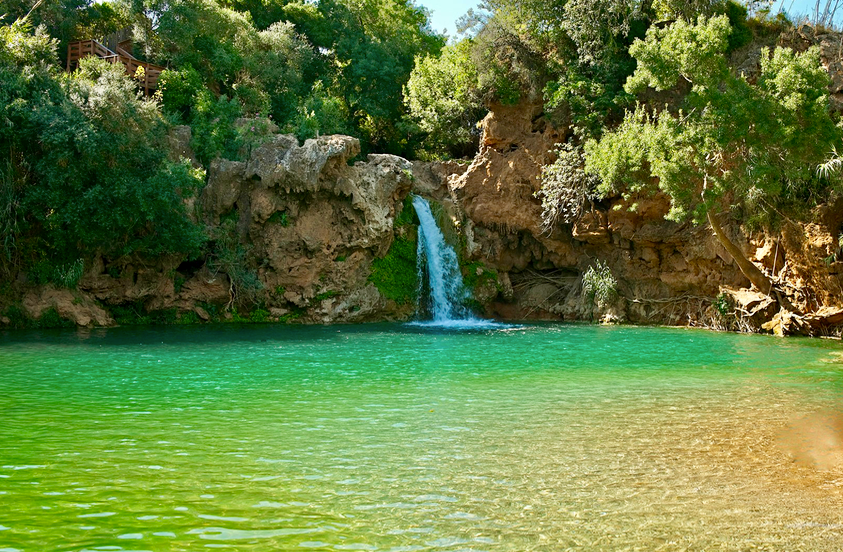
  • Located on the Asseca stream in Santo Estêvão , just 7–10 km northwest of Tavira , Pego do Inferno consists of a modest 3‑meter waterfall flowing into an olive-green plunge pool, estimated to be around seven meters deep .
  • The falls are part of a trio—including Cascata da Torre and Cascata do Pomarinho —all created by water flowing over calcareous tufa formations along the stream.

🕯️ The Legend Behind the Name

According to local lore, a carriage once plunged into the pool and neither the vehicle nor its passengers were ever recovered . Divers reportedly couldn’t find the lake’s bottom—so it earned the dramatic name, “Hell’s Pool”

Some say hidden underwater passages connect to nearby rivers like the Guadiana or Gilão, though no proof exists beyond storytelling.


🚧 Why It Remains Mostly Closed

  • In 2012 , a forest fire swept through the area, destroying the boardwalk, bridge, stairs, and facilities that once made the waterfall easy and safe to visit. The municipality officially closed the area afterward and never rebuilt the infrastructure.
  • Since then, efforts to reopen the site under safe conditions have stalled due to drought , lack of water flow, private land negotiations , and priority projects funded by the Recovery and Resilience Plan (PRR).

🧭 Visiting Now: What to Expect

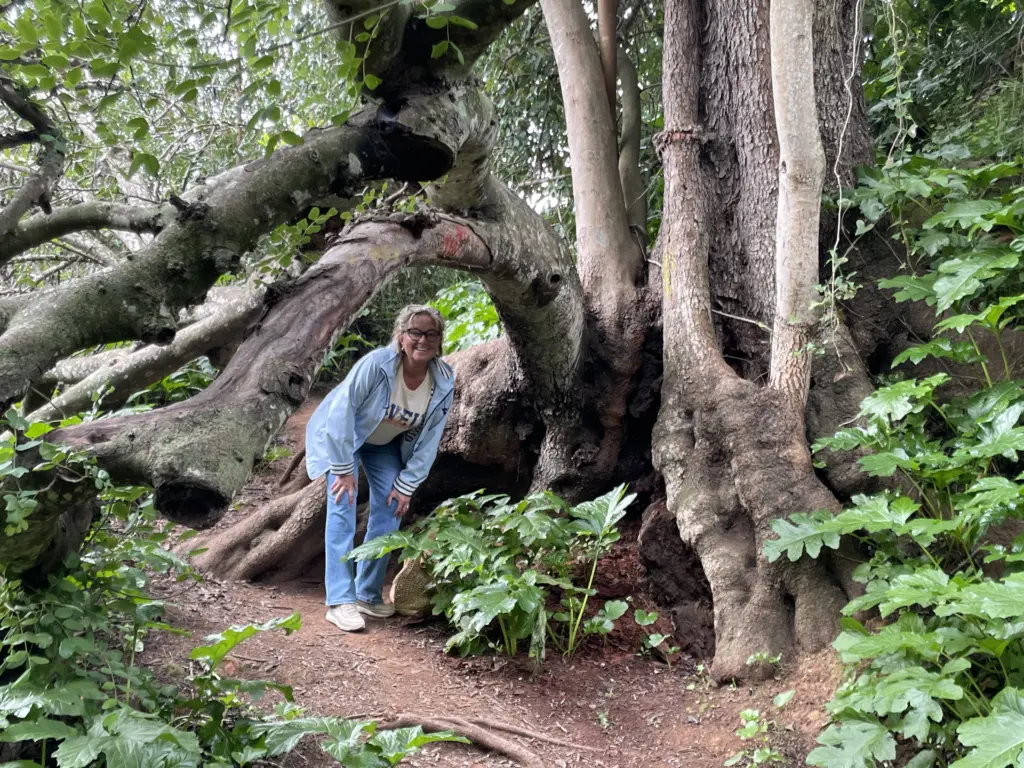
Although officially closed, Pego do Inferno still attracts adventurous locals and holidaymakers who navigate informal paths and dense overgrowth to reach the pool.

Taste Tavira by Annick desribes how to find it.

AllTrails users describe:

  • Overgrown trails through bamboo and citrus groves
  • Stream crossings becoming impossible in winter or bad rain
  • Risky, unclear terrain and degraded trail infrastructure

Tripadvisor reviewers echo concerns:

  • In wet seasons, paths are hazardous
  • In dry seasons, the waterfall may be reduced to a trickle or a stagnant green pool
  • Trash and poor maintenance also worry visitors \.

🗺 Planning Your (Responsible) Visit

If you’re drawn to hidden spots and you’re well-prepared:

TipNotes
Footwear Wear sturdy shoes—trail is uneven and slippery.
Waterflow timing Best after recent rainfall; drought years may leave little to see.
Safety Bring water & snacks, avoid solo visits, and respect “no entry” signs.
Timing Spring and autumn offer the best balance of water and navigable trail.
Access routes Park near Santo Estêvão/Tavira outskirts using GPS and follow local informal directions

Tasting Tavira’s Salt Soul: A Visit to the Historic Salt Pans

There are many things that sparkle in the Algarve sun—ceramic tiles, whitewashed rooftops, chilled vinho verde… But none quite like the salt flats of Tavira. Just a short walk or cycle from the old town, these shallow pools shimmer with a history and craft that stretch back centuries. If you’re curious about where your flor de sal comes from—and you fancy a peaceful stroll with flamingos for company—this is your sign to explore Tavira’s salty soul.


✨ Ancient Tradition in Every Grain

Tavira’s salt pans have been used for salt production since Roman and Moorish times . Even today, the process remains charmingly low-tech: sun, sea, and wind do most of the work, while local salt workers—called marnotos—rake the gleaming crystals by hand.

The real treat? Flor de Sal de Tavira . This delicate salt “flower” forms on the surface and is skimmed gently using wooden tools. No additives, no industrial machinery. Just pure, sea-born flavour.


🚶 How to Visit (And When To Go)

You can explore the salt flats freely by walking or cycling along the Ecovia Litoral trail . From Taste Tavira AL , head toward R. Eng. João Bruno da Rocha Prado, and continue on gravel paths. Best times? Early morning or sunset , when the pools glow pink and gold. July, August, September and early October are the harvest months.


📏 Birds, Colours & Calm

The salt pans aren’t just about salt. They’re part of the Ria Formosa Natural Park , a Ramsar-designated wetland teeming with birdlife. Depending on the season, you might spot flamingos, herons, avocets or even spoonbills, wading delicately between the glinting pools.

And then there’s the colour: subtle pinks, dreamy turquoise, even rusty reds—all caused by natural algae and minerals. Bring your camera, or better yet, a moment of stillness.


🚢 Want to Go Further?

If you prefer a deeper dive, local outfits like Monte da Ribeira (near Estoi, by car) offer sometimes guided salt-harvesting experiences (€28), complete with tools, history, and hands-on raking (yes, you can try it!). Check for actual information.

Or visit Salinas do Grelha (Olhão), where you can also float in a mineral-rich salt lagoon (think Dead Sea… but Algarvian!).


🌿 Salt That Tells a Story

Back in town, look for locally harvested flor de sal at artisan shops or farmer’s markets. This is salt that speaks of place: sea air, sun-drenched patience, and the quiet determination of marnotos.

A visit to Tavira’s salt pans isn’t loud or flashy. It’s slow, grounding, and strangely moving. Just you, the wind, the birds, and a glint of salt underfoot.


🌳 Pomar dos Sabores – Orchard of Flavours – A Taste of Algarve’s Biodiversity

Tucked just a few kilometres from Tavira, Pomar dos Sabores —also known as the Orchard of Flavours —is a beautiful living experiment in sustainable fruit cultivation and agroecology. It’s not your average orchard—it’s a botanical playground bursting with exotic fruit trees, wildlife, and educational inspiration.


🌱 A Living Botanical Garden

Founded in January 2019 , Pomar dos Sabores is a non-profit edible botanical garden certified by Botanical Gardens Conservation International in November 2022 . Spanning 2 hectares , the orchard hosts more than 300 species of fruit trees, ranging from mangoes and lychees to pomegranates and starfruit—each carefully chosen to see what thrives in our Mediterranean climate.

It’s designed as a living classroom: guided tours, self-guided visits, food tree safaris, interactive nature trails, and hands-on workshops in propagation, permaculture, and water-saving techniques.


🧠 Meet Miguel — The Founder’s Vision

Under the leadership of Miguel Cotton , the team at Orchard of Flavours brings passion and scientific rigor to their agroforestry work. Miguel and his team pursued an agroecological approach from the outset: contour-based planting zones developed to prevent erosion, ground cover for soil health, drip irrigation systems, compost ditches, and banana circles for fertility—all shared openly with gardeners worldwide.

Miguel’s commitment is to show that sustainable fruit production in Europe is possible , and that others can replicate these methods in their own gardens or small farms econtigo.ptOrchard of Flavours.


🌿 What You’ll Experience

  • Guided or self-guided tours across diverse planting zones (citrus groves, tropical fruit zones, neglected Mediterranean varietals) with detailed background on each species.
  • Tasting sessions , where you can sample freshly harvested fruits and discover new flavours—often from rare and region-adapted cultivars.
  • Educational workshops —from seed propagation to food forest creation—open to gardeners and curious visitors alike.
  • A public database of over four hundred plants, detailing soil preference, irrigation needs, and climate adaptation data for each species.

🗺️ Sample Visit Outline

ElementExperience
Guided Tour Learn about diverse fruit zones and tree lore
Fruit Tasting Sample exotic varieties—like criollo cacao or cacao pods
Workshop (Optional) Dive into composting, micro-irrigation, water-saving techniques
Picnic or Relaxation Rest under shade trees and soak in the orchard atmosphere

Day Trip from Tavira: Cacela Velha & Surroundings

Looking for a peaceful escape from Tavira? Head east for a day trip to Cacela Velha —a tiny, whitewashed village perched high above the Ria Formosa lagoon. It’s just 15 minutes away but feels like stepping into another time.


🚍 Getting There – By Bus, Bike or Car

  • By bus : Take Vamus Bus 67 (Tavira–Vila Real de Santo António) and get off at Vila Nova de Cacela . From there, it’s about a 20-minute walk (1.6 km) to the village.
  • By car : Just a 15-minute drive (12 km) east along the N125. Free parking is available just outside the village gates.
  • By bike : The scenic Ecovia Litoral do Algarve bike trail passes near Cacela Velha, making it a great eco-friendly cycling destination.

🏘️ Discovering Cacela Velha

This serene village sits atop a cliff with panoramic views of the Ria Formosa Natural Park and the Atlantic beyond. It’s tiny—just a few houses, one cobbled street, and silence interrupted only by birdsong and distant waves.

  • Visit the Igreja de Nossa Senhora da Assunção , a 16th-century church rebuilt after the 1755 earthquake. It’s modest inside, but the terrace outside offers sweeping views over the water.
  • Walk along the edge of the Fortaleza de Cacela (closed to the public), a military structure dating to the 18th century and built on earlier Moorish ruins. From here, you’ll get postcard-perfect photos of the sandbanks and islands of the Ria Formosa.

🏖️ Praia da Fábrica – The Beach Adventure

Down below Cacela Velha lies one of Portugal’s most beautiful beaches: Praia da Fábrica . But it’s not a simple stroll:

  • To reach the beach, go to Sítio da Fábrica (a 10-minute walk from Cacela Velha) where small boats ferry visitors across the shallow lagoon. It costs around €1.50 return per adult .
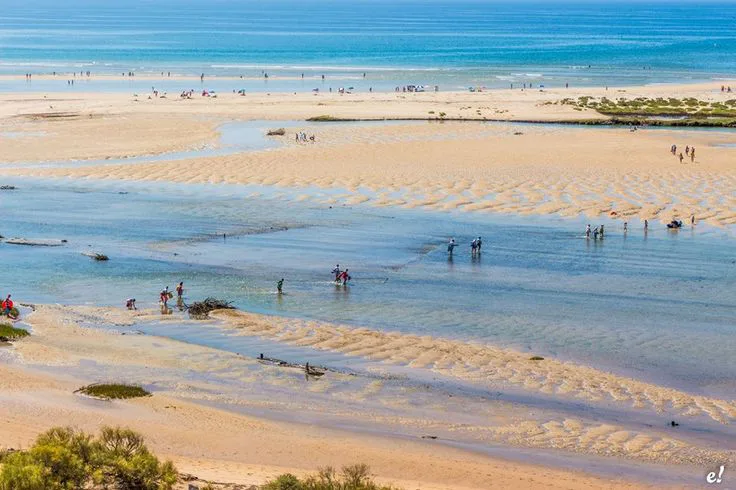
  • At low tide , you can walk across the sandbanks to reach the beach—but be extremely cautious . The area is known for strong currents and unmarked channels , and multiple rescue operations have taken place in recent years (HuffPost ES).

🚲 The Scenic Route – Cycling from Tavira

For the active traveller, rent a bike at Abílio Bikes in Tavira and follow the Ecovia do Litoral eastward. You’ll pass orange groves, salt pans, and sleepy villages before arriving at Cacela Velha. It’s around 13 km one way , mostly flat and low-traffic—ideal for a sustainable adventure.


🍴 Where to Eat

There are only a couple of options in Cacela Velha:

  • Casa Velha – A charming, family-run spot offering grilled fish, clams, and Algarve-style tapas. Reservations recommended in summer.
  • Restaurante Marisqueira Fábrica do Costa – Located at the landing point in this casual seafood spot specialises in oysters, razor clams (lingueirão), cataplana, and grilled fish.

For more variety, head back to Cabanas de Tavira or of course Tavira itself.


📍 Optional Nearby Stops

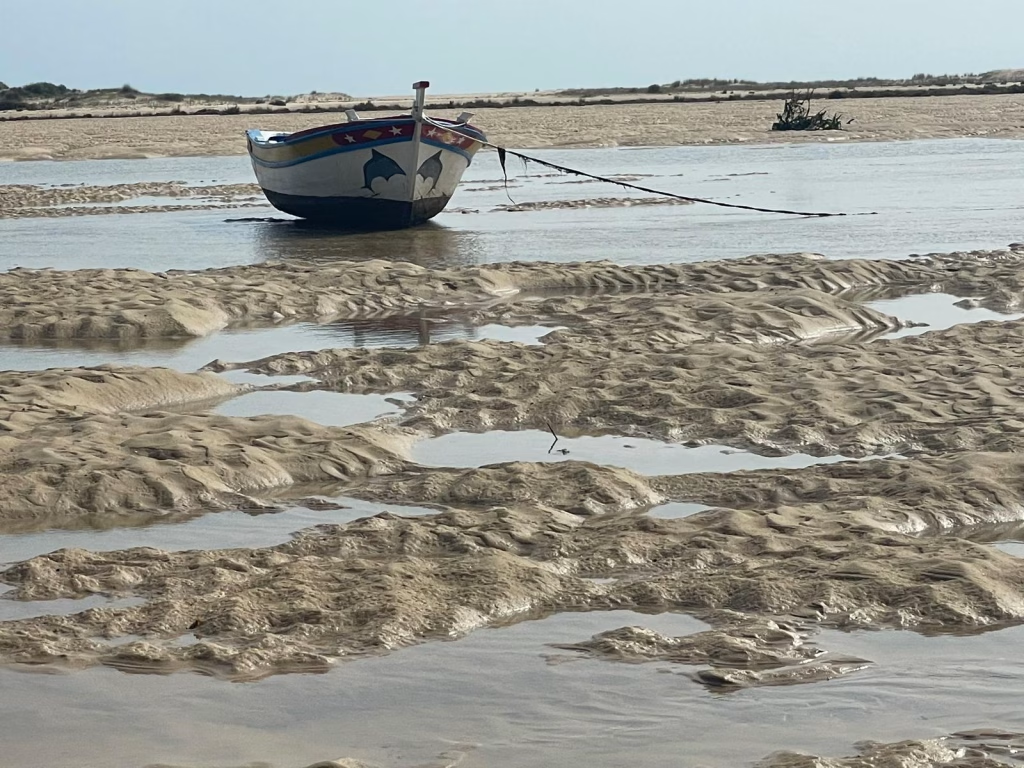
  • Cabanas de Tavira – A relaxed fishing village with a riverside boardwalk, traditional boats, and easy ferry access to Ilha de Cabanas beach.
  • Vila Nova de Cacela – A small town inland from Cacela Velha with shops, cafés and a more lived-in feel.

🌍 Why This Day Trip is Worth It

  • Authentic and untouched by mass tourism
  • Rich in history and tradition
  • Stunning landscapes and wildlife
  • A great example of low-impact, slow travel

Whether you’re drawn by the sea air, the cobbled paths, or the peacefulness of a place where time really does seem to stand still—Cacela Velha is a gentle kind of magic.