How to Get from Faro Airport to Tavira center or Taste Tavira AL

A calm arrival into the eastern Algarve

There’s something about landing in Faro that immediately slows you down. The light feels softer, the air warmer, and even the airport itself seems to move at a gentler pace. Tavira, just a little further east, continues that feeling — a town where time stretches, and days unfold slowly.

Getting from Faro Airport to Tavira is simple. But the way you choose to travel can shape your first impression of the Algarve. Here’s how to do it — calmly and effortlessly.


✈️ How far is Tavira from Faro Airport

The Distance (and what it feels like)

Tavira is about 40 kilometers east of Faro Airport , and depending on your choice of transport, the journey takes between 30 minutes and 1 hour .

It’s not a long journey — but it’s a beautiful one. Salt flats shimmer in the distance, flamingos sometimes appear like soft pink brushstrokes, and the landscape gradually becomes quieter.


🚖 Taxi, Uber and Bolt from Faro Airport

Option 1: Taxi, Uber or Bolt (Effortless arrival)

If you prefer to arrive without thinking about directions, a taxi or ride app is the most seamless option.

Travel time: 30–40 minutes
Cost: €35–€50

Both Uber and Bolt work very well in the Algarve and are usually quickly available at Faro Airport . Simply open the app after landing, request a ride, and within minutes you’ll be on your way. Costs are lesser than regular taxis (€28-€40) and since februari 2026 the pickup is at P4 parking (1 minute walk, as indicated in your app)

There’s something comforting about stepping outside and being taken directly to your door — no waiting, no navigating — just watching the Algarve pass by your window.

Good to know:

  • Pick-up is just outside arrivals
  • Prices of Bolt and Uber are transparent in the app
  • Often slightly cheaper than regular taxis

🚗 Car rental at Faro Airport

Option 2: Renting a Car (Freedom from the start)

For many travelers, renting a car is the easiest and most flexible way to reach Tavira.

Travel time: ~35 minutes
Best for: Exploring, comfort, independence

From the airport, you simply follow the A22 motorway east. The roads are smooth, well-marked, and rarely stressful. Within minutes, the city fades and the Algarve begins to open up.

An alternative way is following the N125. Straight on through Olhão. (the roundabout is scheduled to open summer 2026)

A platform like Carjet.com is often a good place to compare options. When booking, it’s worth selecting:

  • Pick-up at the airport (not shuttle)
  • Clear fuel and insurance conditions
  • Book well in advance for better rates

Why choose this option:

  • You can stop whenever something catches your eye
  • Easy access to beaches and nearby villages
  • Ideal if you’re staying longer than a few days

And once you arrive in Tavira:
Parking is generally free and easy to find , especially just outside the historic center — another reason why having a car here feels relaxed rather than stressful.


🚆 Train from Faro to Tavira

Option 3: Train (Slow travel, local rhythm)

Taking the train is a quieter, more local way to arrive in Tavira.

Travel time: 1h15 – 1h30 (including transfer)
Cost: ~€4–€6

First, you’ll need to get from the airport to Faro city center (a short Uber, Bolt or taxi ride). From there, trains run regularly to Tavira.

The journey itself is simple, but also unexpectedly peaceful. Small stations, glimpses of daily life, and stretches of untouched landscape make this feel less like transport and more like arrival.


🚌 Bus from Faro to Tavira

Option 4: Bus (Practical and affordable)

There are also buses connecting Faro to Tavira.

Travel time: ~1 hour
Cost: ~€5–€10

Like the train, you’ll first need to reach Faro city center. From there, buses are straightforward and reliable.


🏡 Arriving in Tavira

Whether you arrive by train or bus, you’ll notice something immediately: Tavira is wonderfully walkable.

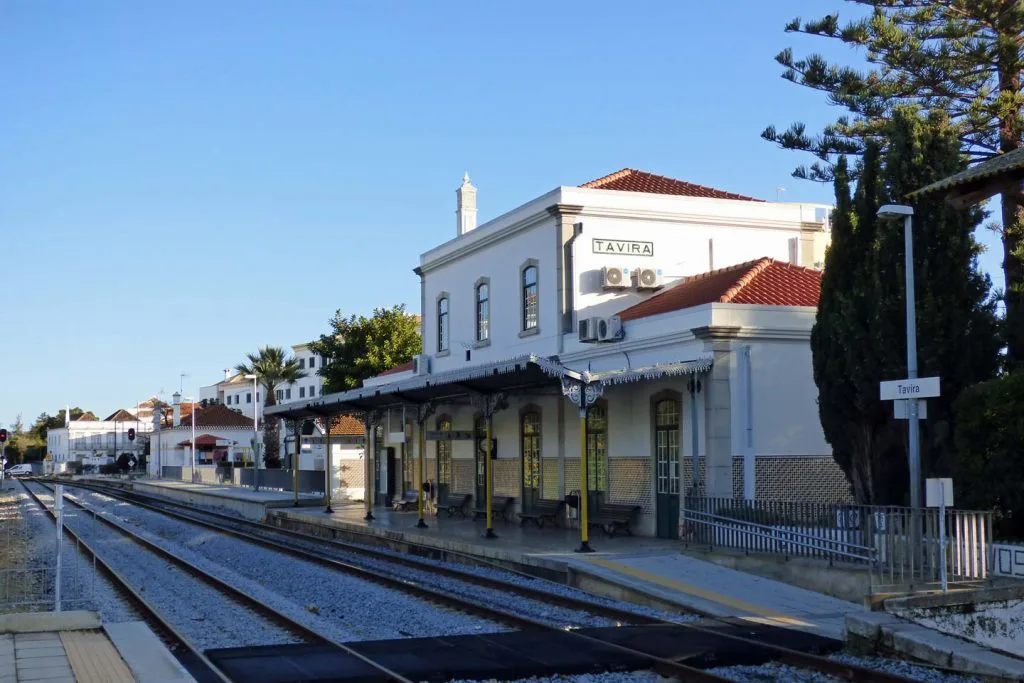
  • From Tavira train station or bus station , it’s a short walk to the historic center
  • Taste Tavira AL is also within walking distance
  • No need for taxis once you’re here — everything unfolds slowly, step by step

🌿 What is the best way to get to Tavira?

So… what’s the best way?

It depends on how you want to begin.

  • Want ease? Take an Uber, Bolt or taxi
  • Want freedom? Rent a car
  • Want to ease into the Algarve slowly? Take the train

There’s no wrong choice here — only different rhythms.


✨ A final thought

The journey from Faro to Tavira isn’t just about getting from A to B. It’s your first glimpse of a different pace of life.

And whether you arrive by car, train, or a quiet ride through the salt flats — somewhere along the way, you’ll start to feel it:

Things are softer here. Slower.
And Tavira is already waiting.
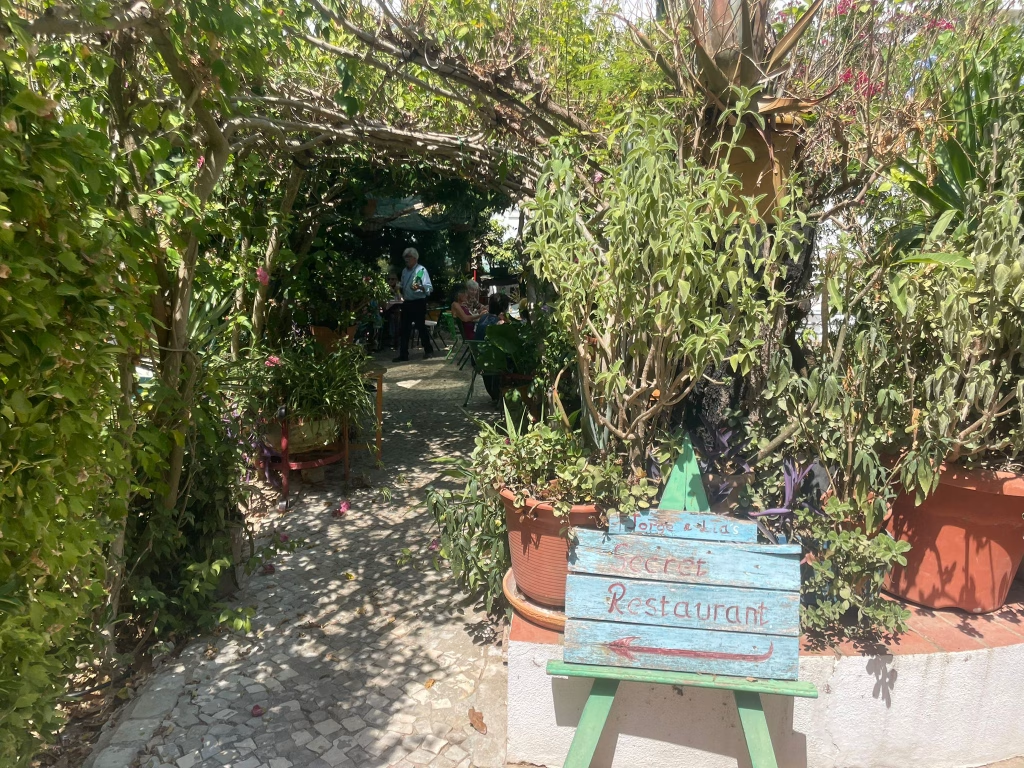
A Little Secret Garden Restaurant Around the Corner: Jorge & Lia

Some places in Tavira don’t announce themselves. They don’t need to. They sit quietly, waiting for you to wander by—curious enough to enter. Jorge & Lia is one of those places.

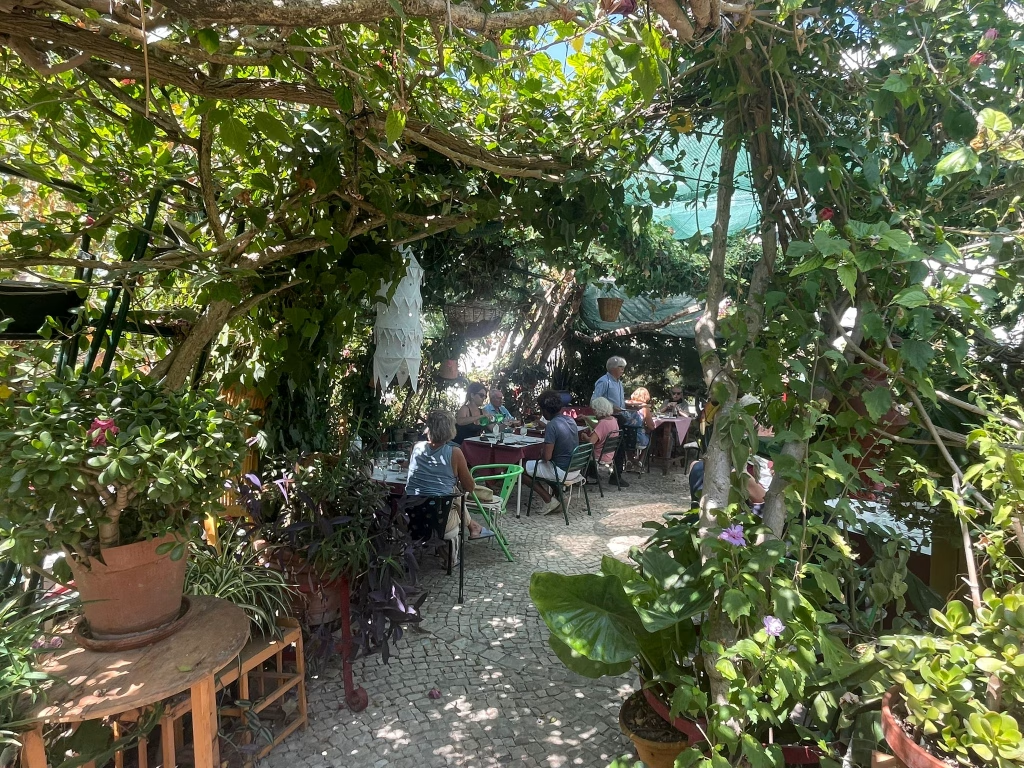
If you come in from Rua Manuel Virgino Pires , you’ll pass the old stone water well. Blink, and you might miss it. But step a little further and—surprise—you slip straight into Tavira’s very own Secret Garden Restaurant . Shaded by trees, surrounded by greenery, it feels almost like stumbling into a hidden courtyard in another time. A reviewer once called it “a secret well kept in Tavira”, and I couldn’t agree more.


🌿 Why It Feels Special

From the outside, it might look like just another simple restaurant. Entering from Rua do Alto do Cano 19 , you step first into the churrasqueira-style dining room. Nothing unusual there—plain, straightforward. But the real surprise is waiting out back. Step through and suddenly you’re in the garden, where a handful of tables sit beneath the trees. The atmosphere shifts completely: calm, unhurried, almost secret.

You might catch loungy music floating in from the square—never too loud, just a soft backdrop that blends perfectly with the clinking of glasses and the rustle of leaves. It’s the kind of place where lunch doesn’t feel rushed. You sit, you sip, you chat, you breathe. And before you know it, you’ve stayed much longer than you planned.


🍴 What to Order

The menu changes, but a few things stand out:

  • The lamb —locals rave about it, perfectly cooked, full of flavour.
  • Fresh fish , straight from the market, often grilled with just the right touch.
  • The dishes with the Mushroom Sauce , “com molha de cogumelas
  • Seasonal dishes that reflect what’s available locally.

Lia’s cooking has that combination of simplicity and care that makes every dish feel homely but never heavy. It’s honest food, made with heart.


👋 The Hosts

And then, of course, there’s Jorge. Always around, always present—but never hovering. Someone once wrote “attentive but not intrusive”, and it couldn’t be more true. He welcomes you, checks in just enough, and then steps back so you can enjoy the moment.

Together, Jorge and Lia have created something that feels both personal and relaxed. A place that doesn’t shout for attention, but quietly earns it.


🍷 Why I Love It

For me, it’s the location. The restaurant garden is tucked into one of the most popular neighbourhoods for expats and visitors to Tavira, just separated to the historic center by the railway. And almost around the corner from Taste Tavira AL , but somehow it feels miles away. You walk passed the inner garden of the condominium, you cross the street, and suddenly you’re tucked into this peaceful garden with a glass of vinho branco in hand. It’s like slipping into your own little world—without ever leaving the centre of town.

That balance—close yet hidden, casual yet special—is what makes Jorge & Lia one of Tavira’s best-kept secrets.


✨ Final Word

So if you’re strolling through Tavira, looking for a place to slow down, eat well, and feel just a little spoiled—try Jorge & Lia . Go for lunch, stay for coffee, maybe even linger over dessert. Just don’t tell too many people. Some secrets are best discovered slowly.


Beginner’s Guide to Golf in Tavira: Where to Start

So you’re in Tavira, you’ve admired the rolling greens from afar, and now you’re thinking… maybe it’s time to give golf a shot. Good news: Tavira is a fantastic place to start. Whether you’re here for a week or moving in for good, the Algarve’s eastern coastline is full of welcoming courses, relaxed instructors, and stunning views that make even your first swing feel like a win.

Here’s your no-pressure, beginner-friendly guide to getting into golf in Tavira.


🏌️‍♂️ 1. Start with a Lesson – Yes, Really!

You don’t have to take a lesson, but trust me: one good session with a pro can save you hours of frustration and teach you the basic mechanics before you head out onto the course.

Top pick: Benamor Golf
Just five minutes from central Tavira, Benamor Golf has a friendly, English-speaking team of instructors who are great with beginners. You can book private lessons or join a group session if you’re feeling social. Plus, the vibe here is relaxed—not one of those intimidating “pros-only” clubs.

Other options:

  • Quinta da Ria / Quinta de Cima – a bit more advanced, but lessons available
  • Monte Rei – luxury option with excellent coaching, but on the (very) pricier side

⛳ 2. Where to Play? Go Wide, Go Easy

Not all golf courses are beginner-friendly. Some are tight, technical, or just plain intimidating. Luckily, there’s a perfect starting point right here:

Benamor Golf Course

  • 18 holes
  • Wide fairways
  • Relatively flat terrain
  • Welcoming to all levels

This is hands-down one of the best courses in the area if you’re still finding your swing. You won’t feel rushed or judged, and the course layout gives you some breathing space—even if your ball occasionally takes a detour.


🎯 3. Try the Academy Course at Quinta da Cima

Still not ready for a full 18 holes? No worries.

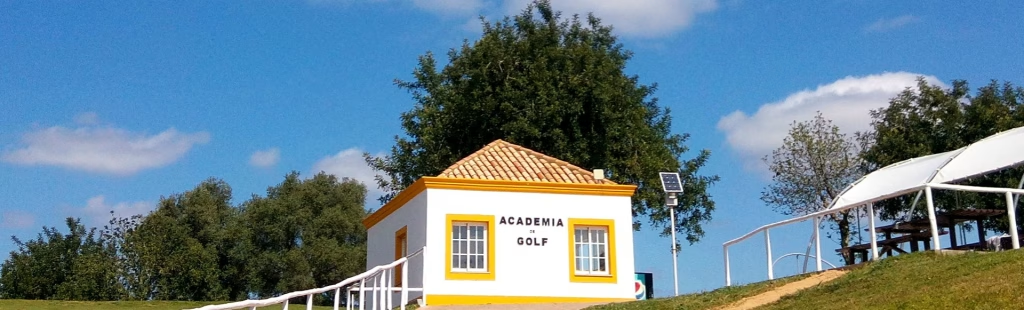
Tucked away next to the more advanced Quinta da Cima course is a 9-hole Par 3 Academy Course , perfect for practice rounds, lessons, or just hitting around with friends.

  • It’s short.
  • It’s quiet.
  • And you can often play with just two balls if it’s not busy (which it usually isn’t).

This is a brilliant option for beginners who want to build confidence without the pressure of a big course. Plus, the greens are in great condition and the surroundings are stunning.

Tip: Bring your own water and snacks—there’s not always a café open on the academy side.


💡 Extra Tips from Beginner Golfers in Tavira

  • Early mornings = less pressure. Fewer players = less stress.
  • Rent clubs before buying. Most clubs offer rentals, and it’s a great way to try different styles before committing.
  • Don’t skip the driving range. Even 30 minutes of hitting balls can do wonders for your rhythm.
  • Footwear matters. You don’t need fancy golf shoes at first, but go for something grippy and comfortable.
  • Respect the pace of play. If a faster group is coming up behind you, let them play through—everyone appreciates it, and you’ll enjoy your round more without the pressure. And here’s a simple rule of thumb: if you’ve taken 6 shots over par (that’s 10 on a Par 4) and still haven’t holed out, it’s totally okay to pick up your ball and move on . You’re not giving up—you’re keeping the game fun for everyone, including yourself.

Bonus tip (no shame in this one):
⛳ On Par 4s or Par 5s, don’t feel like you have to start from the tee if you’re not hitting far yet. Start from the 150m or 200m marker instead—it makes the hole much more manageable, keeps things moving, and gives you a better chance to score well (or at least not lose 3 balls in the bushes). Loads of beginners (and even some pros-in-recovery) do this when they’re warming up.


🏆 Final Thoughts

Golf in Tavira isn’t just for seasoned players with single-digit handicaps. It’s for anyone who wants to enjoy the sunshine, the scenery, and the satisfying click of a well-hit ball. With beginner-friendly courses like Benamor and Quinta da Cima’s academy loop, plus easy access to lessons, this corner of the Algarve is the ideal place to take your first swing.

Who knows? You might fall in love with the game.

Moorish Waterwheels in Tavira: History, Hidden Trails & a Local Gem Near Taste Tavira AL

You may walk past one without noticing. A rusted wheel, half-buried in bougainvillea, wooden buckets barely holding on, and a mysterious circular track on the ground. Yet what you’re seeing is part of an ancient irrigation system — a nora, or Moorish waterwheel — that has quietly shaped the Algarve landscape for centuries.

These beautiful relics from Islamic Iberia are more than a curiosity. They are a reminder of Tavira’s layered past, its agricultural genius, and its connection to the rhythm of water and land. And the best part? One of them is hidden just 50 metres from our front door at Taste Tavira AL .


🏺 From Al-Andalus to Algarve: The Origins of the Nora

The nora (from Arabic: ناعورة na‘ūra) was introduced to the Iberian Peninsula during the Moorish period, between the 8th and 13th centuries, when Islamic rule flourished in the Algarve. The Moors brought with them advanced water management techniques — from terraced farming to cisterns, and of course, waterwheels.

Unlike vertical mills used for grinding grain, the nora is a horizontal irrigation system. Powered by animal strength — typically donkeys, mules, or oxen — the wheel turned continuously, lifting water from a well via a loop of clay or wooden buckets.

Technical detail:
Each turn of the wheel could lift several litres of water from as deep as 10 meters and even more, spilling into aqueducts that distributed the water across terraced fields of figs, carob, almonds, and olives.

Many of these systems remained in use well into the 20th century. Today, most stand still — silent witnesses to a time when water, not Wi-Fi, was the most precious resource.


🧭 Discover a Waterwheel Near Taste Tavira AL

Right at the corner of Rua Maria de Lurdes Braga Teixeira and Rua de Santo Estêvão , you’ll find a small, hidden gem: a complete nora with its original donkey wheel, gear system, and even the wooden buckets still intact . I discovered it on a quiet morning walk, and now it’s a stop I recommend to every curious guest.

It’s tucked against a white wall, just behind some garden fencing — easy to miss if you’re not looking. But once you spot it, you’ll see the full mechanism: the gear cogs, the track where the donkey walked, and even the faded wood where hands once repaired the rig.

Another small wonder lies just down the road, in Rua Manuel Virgínio Pires , on the small square that leads to the “Secret” restaurant of Jorge and Lia . Here, a deep Moorish-style well reminds us of the silent systems that sustained entire communities — cool water, drawn by hand or beast, in the hot Algarve sun.

These waterwheels weren’t just about function — they were engineering landmarks. The wheel at the highest point of the backland trails likely served several small farms. Water flowed by gravity to lower fields, guided by narrow stone channels still visible if you venture off the main paths by foot or by bike


By Bike or Car: Spotting Wells Across the Landscape

As you drive or cycle through Tavira’s rural backroads keep your eyes open: water wells are everywhere . Dotted across farmland, tucked between citrus trees or hidden behind crumbling stone walls, these stone-ringed wells are a quiet but powerful sign of the Algarve’s agricultural soul.

Many of these wells are dry now, but they remain — in circles of stone, rusted pulleys, and the occasional crank still intact — a kind of archaeological poetry in plain sight . Whether on foot, bike, or behind the wheel, it’s a slow adventure of looking closely and letting the land tell its story.


🌿 Why These Waterwheels Still Matter

In today’s age of apps and automation, it’s humbling to see how water was lifted, bit by bit, using nothing more than gravity, animal power, and ingenuity. These systems shaped Tavira’s fertile valleys and made year-round farming possible in a sun-baked region.

They are also architectural hybrids : a blend of Roman engineering and Arab design. You’ll find them nowhere else in Europe quite like this.


📸 Photo Suggestions for Your Facebook or Insta

  • Detail shot of the rusted gear teeth
  • The turning circle where the donkey walked
  • Side-by-side comparison: modern pump vs nora
  • Old map overlay of irrigation systems
  • Soft light silhouette with bougainvillea background

✨ Final Thought

So next time you’re in Tavira Tavira AL, pause beside that old wheel. Feel the sun on your back, the quiet buzz of insects in the dry air — and listen, just maybe, for the echo of hooves and the splash of water in motion. The noras may have stopped turning, but their story is still flowing.