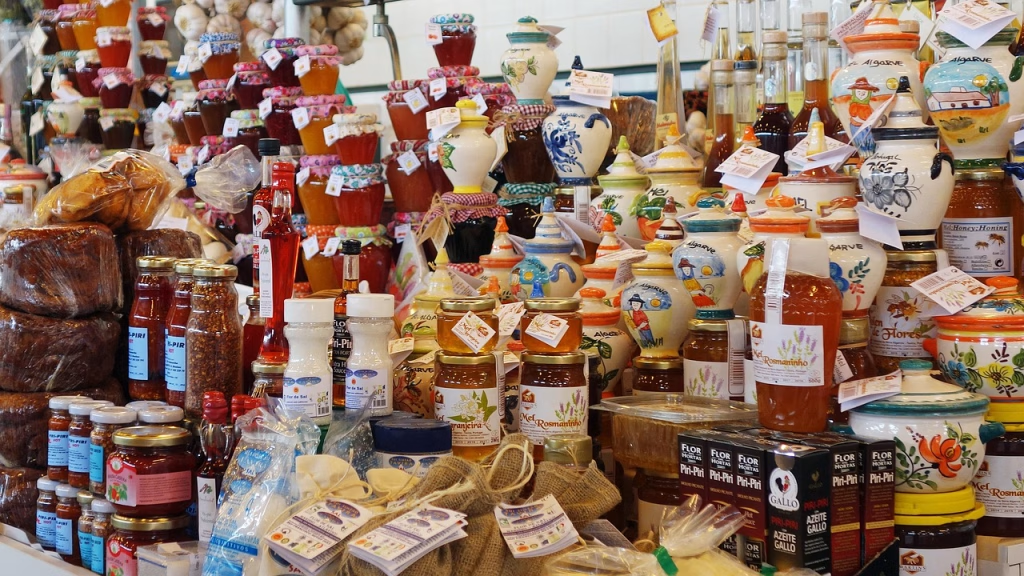
How to Get from Faro Airport to Tavira center or Taste Tavira AL

A calm arrival into the eastern Algarve

There’s something about landing in Faro that immediately slows you down. The light feels softer, the air warmer, and even the airport itself seems to move at a gentler pace. Tavira, just a little further east, continues that feeling — a town where time stretches, and days unfold slowly.

Getting from Faro Airport to Tavira is simple. But the way you choose to travel can shape your first impression of the Algarve. Here’s how to do it — calmly and effortlessly.


✈️ How far is Tavira from Faro Airport

The Distance (and what it feels like)

Tavira is about 40 kilometers east of Faro Airport , and depending on your choice of transport, the journey takes between 30 minutes and 1 hour .

It’s not a long journey — but it’s a beautiful one. Salt flats shimmer in the distance, flamingos sometimes appear like soft pink brushstrokes, and the landscape gradually becomes quieter.


🚖 Taxi, Uber and Bolt from Faro Airport

Option 1: Taxi, Uber or Bolt (Effortless arrival)

If you prefer to arrive without thinking about directions, a taxi or ride app is the most seamless option.

Travel time: 30–40 minutes
Cost: €35–€50

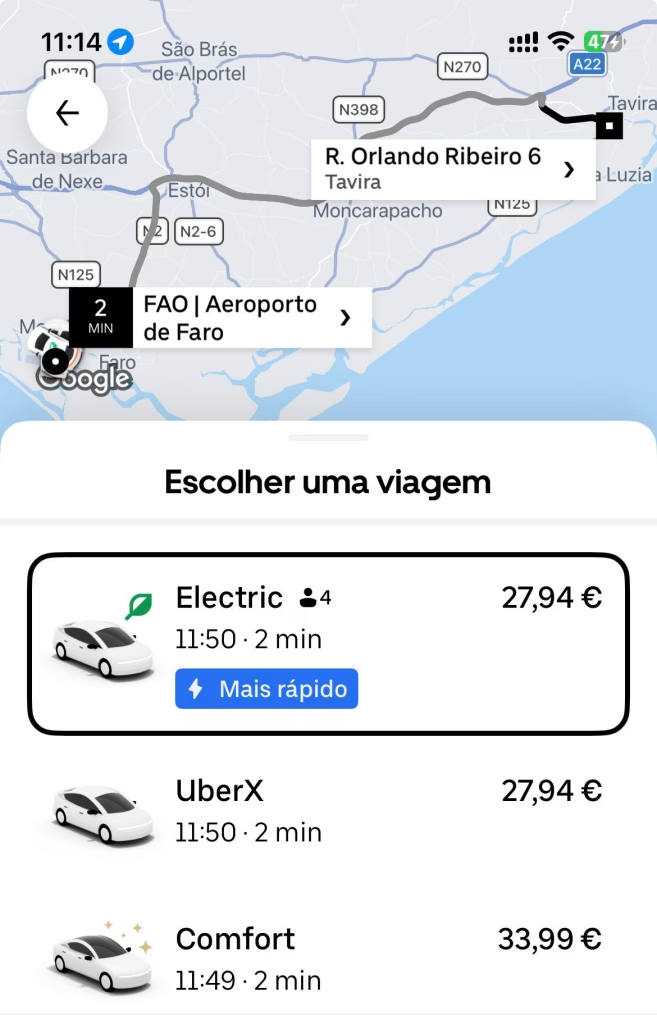
Both Uber and Bolt work very well in the Algarve and are usually quickly available at Faro Airport . Simply open the app after landing, request a ride, and within minutes you’ll be on your way. Costs are lesser than regular taxis (€28-€40) and since februari 2026 the pickup is at P4 parking (1 minute walk, as indicated in your app)

There’s something comforting about stepping outside and being taken directly to your door — no waiting, no navigating — just watching the Algarve pass by your window.

Good to know:

  • Pick-up is just outside arrivals
  • Prices of Bolt and Uber are transparent in the app
  • Often slightly cheaper than regular taxis

🚗 Car rental at Faro Airport

Option 2: Renting a Car (Freedom from the start)

For many travelers, renting a car is the easiest and most flexible way to reach Tavira.

Travel time: ~35 minutes
Best for: Exploring, comfort, independence

From the airport, you simply follow the A22 motorway east. The roads are smooth, well-marked, and rarely stressful. Within minutes, the city fades and the Algarve begins to open up.

An alternative way is following the N125. Straight on through Olhão. (the roundabout is scheduled to open summer 2026)

A platform like Carjet.com is often a good place to compare options. When booking, it’s worth selecting:

  • Pick-up at the airport (not shuttle)
  • Clear fuel and insurance conditions
  • Book well in advance for better rates

Why choose this option:

  • You can stop whenever something catches your eye
  • Easy access to beaches and nearby villages
  • Ideal if you’re staying longer than a few days

And once you arrive in Tavira:
Parking is generally free and easy to find , especially just outside the historic center — another reason why having a car here feels relaxed rather than stressful.


🚆 Train from Faro to Tavira

Option 3: Train (Slow travel, local rhythm)

Taking the train is a quieter, more local way to arrive in Tavira.

Travel time: 1h15 – 1h30 (including transfer)
Cost: ~€4–€6

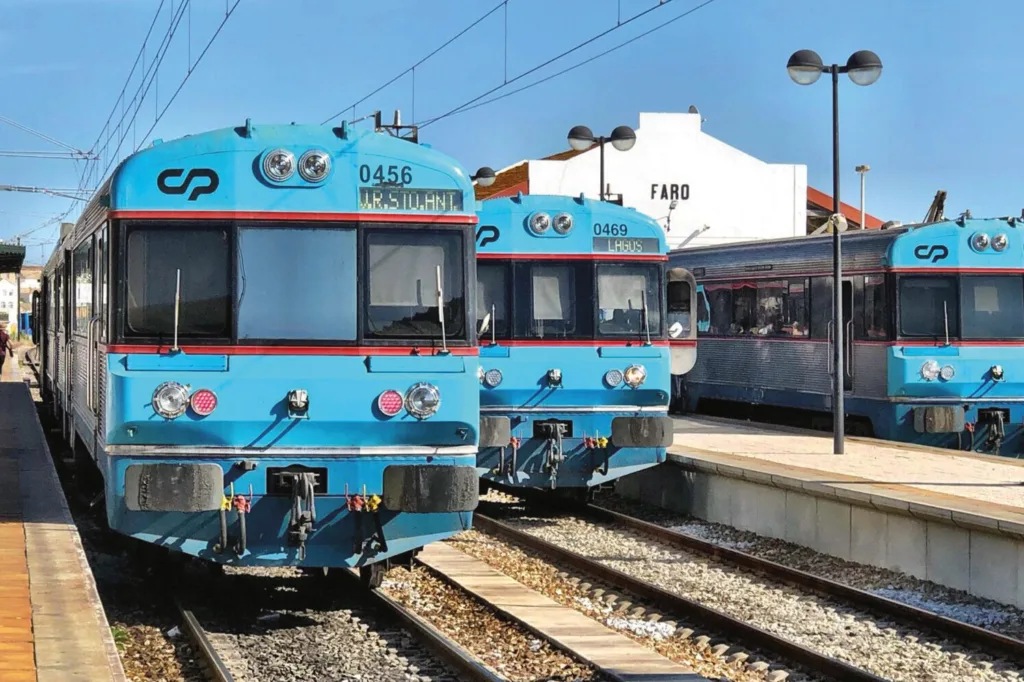
First, you’ll need to get from the airport to Faro city center (a short Uber, Bolt or taxi ride). From there, trains run regularly to Tavira.

The journey itself is simple, but also unexpectedly peaceful. Small stations, glimpses of daily life, and stretches of untouched landscape make this feel less like transport and more like arrival.


🚌 Bus from Faro to Tavira

Option 4: Bus (Practical and affordable)

There are also buses connecting Faro to Tavira.

Travel time: ~1 hour
Cost: ~€5–€10

Like the train, you’ll first need to reach Faro city center. From there, buses are straightforward and reliable.


🏡 Arriving in Tavira

Whether you arrive by train or bus, you’ll notice something immediately: Tavira is wonderfully walkable.

  • From Tavira train station or bus station , it’s a short walk to the historic center
  • Taste Tavira AL is also within walking distance
  • No need for taxis once you’re here — everything unfolds slowly, step by step

🌿 What is the best way to get to Tavira?

So… what’s the best way?

It depends on how you want to begin.

  • Want ease? Take an Uber, Bolt or taxi
  • Want freedom? Rent a car
  • Want to ease into the Algarve slowly? Take the train

There’s no wrong choice here — only different rhythms.


✨ A final thought

The journey from Faro to Tavira isn’t just about getting from A to B. It’s your first glimpse of a different pace of life.

And whether you arrive by car, train, or a quiet ride through the salt flats — somewhere along the way, you’ll start to feel it:

Things are softer here. Slower.
And Tavira is already waiting.
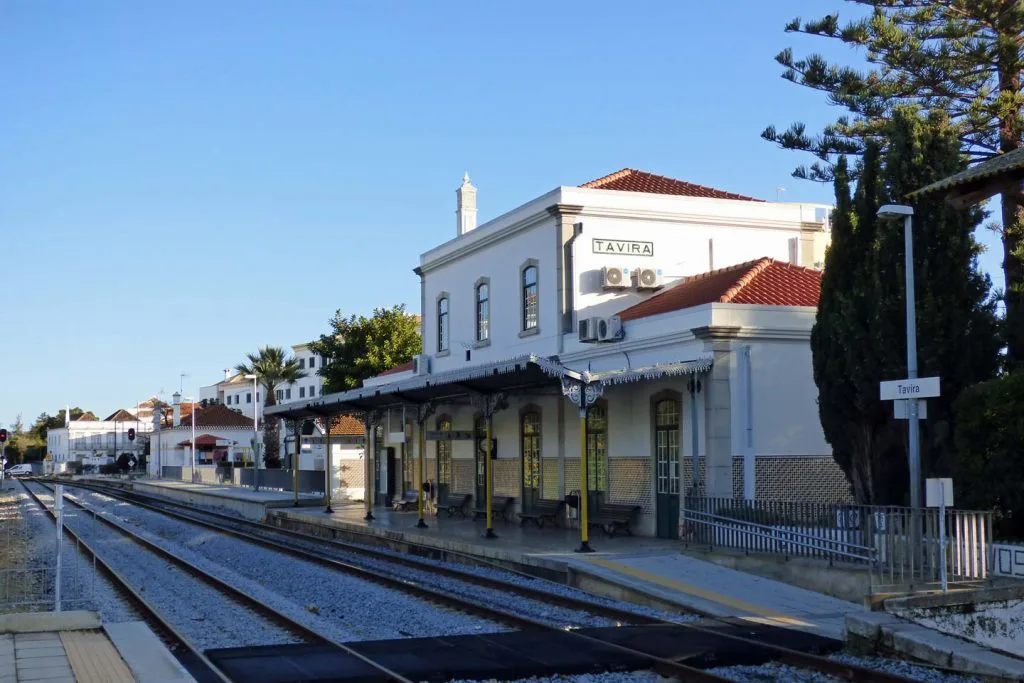
Exploring the Algarve by Train: From Tavira East and West

There’s something quietly magical about riding the regional train through the Algarve. No traffic, no rush — just the rhythmic hum of the tracks and a slow parade of landscapes slipping past the window. From Tavira’s charming station at 400m from Taste Tavira AL, you can head either east toward Vila Real de Santo António , or west to Lagos . Both directions promise their own delights.

🌅 Eastbound to Vila Real de Santo António

The journey east takes around 25 minutes , with frequent daily departures. It’s a short but scenic ride through salt flats, citrus groves, and sleepy hamlets of the eastern Algarve.

Recommended stops along the way:

  • Monte Gordo : A touristic beach town with golden sands, perfect for a seaside break just minutes from the station.

Once you arrive in Vila Real de Santo António , the streets open up in clean lines — a legacy of Enlightenment-era urban planning. Sit for a bica on the grand square, or stroll the riverfront promenade along the Guadiana River, just steps from Spain.

🌊 Westbound to Lagos

Heading west is a longer ride — nearly three hours , often with a transfer in Faro . But the trip is more than transport; it’s a slow dive into the changing rhythms of the Algarve.

Where to stop along the way:

  • Fuseta : A charming fishing village known for its fresh seafood and calm beaches, easily reachable from the station.
  • Olhão : Known for its lively fish market and traditional charm, this coastal town invites you to explore its tiled streets and sample fresh seafood.
  • Faro : The Algarve’s capital with a beautiful old town, historic walls, and a vibrant café culture — a perfect stopover.
  • Portimão : Famous for grilled sardines and riverside dining, it’s a great place to stretch your legs and enjoy local flavors.

Arriving in Lagos , you’ll be greeted by golden cliffs, cobbled lanes, and a laid-back surf-town vibe. It’s worth staying a night if you can.

🎟️ Travel Tips

  • Tickets are affordable and can be bought at the station or online at cp.pt.
  • Trains are comfortable , though simple — no reserved seating, but plenty of charm.
  • Schedules vary slightly on weekends or holidays, so check ahead if you’re planning a longer day out.

Whether you’re seeking beach time, history, or just a slow way to see more of the Algarve, the train from Tavira offers a window onto the region’s quiet beauty — one stop at a time.

Faro – History and Hidden Corners in the Capital of the Algarve

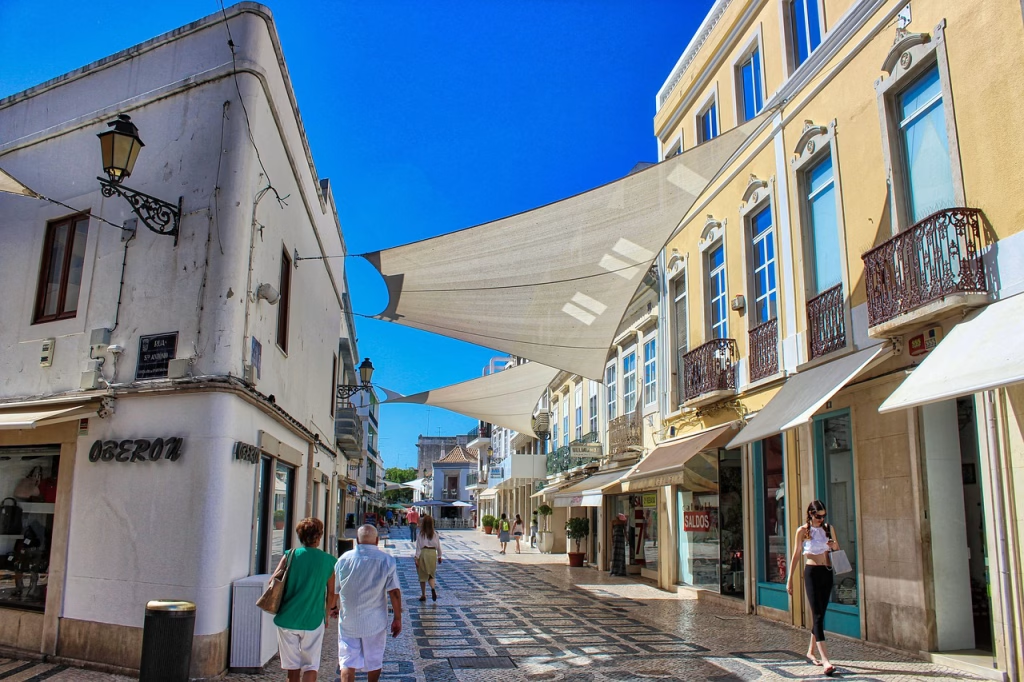
Often overlooked in favour of beach towns, Faro is the cultural and administrative heart of the Algarve — and absolutely worth a visit. While its airport may be most travellers’ first glimpse of the region, Faro is far more than a transit point: it’s a city steeped in history, charm, and quiet sophistication .

Best of all, Faro is easily accessible by train from Taste Tavira AL . The charming Tavira train station is just a five-minute walk (400 metres) away. From there, you can enjoy a scenic 40-minute ride through the eastern Algarve’s countryside straight into Faro’s historic centre — relaxed, car-free, and affordable.

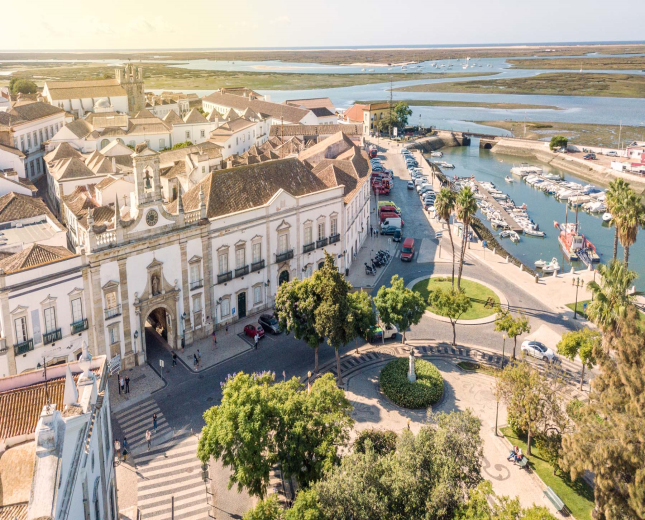
Begin in the Cidade Velha , the old walled town. Enter through the neoclassical Arco da Vila and step into a cobbled world of ancient churches, peaceful squares, and Roman ruins. The cathedral (Sé) , with its mix of Gothic, Renaissance and Baroque features, offers a climbable bell tower with sweeping views over the Ria Formosa lagoon .

Speaking of the lagoon — Faro is also a gateway to nature. The Ria Formosa Natural Park is right on the city’s doorstep, offering boat tours, birdwatching (keep an eye out for flamingos), and a chance to visit island beaches like Ilha Deserta or Ilha do Farol .

Faro has a distinct, low-key elegance, with museums, art galleries , and a lively local dining scene. Don’t miss the haunting Capela dos Ossos (Chapel of Bones) inside the Carmo Church, a striking reminder of the region’s Catholic heritage. For something lighter, grab lunch at one of the many modern bistros or traditional tascas , and enjoy a stroll along the marina before heading back to Tavira.

A Stroll Through Some Of The Markets of the Eastern Algarve

Tavira: The town center buzzes with markets. The Mercado Municipal de Tavira (Avenida Eduardo Mansinho) is open Monday–Saturday 7:00–13:00 (weekday), offering fresh fish, meats, fruits and vegetables from local producers. Beyond that, Tavira hosts special weekend markets: a monthly “Mercado Mensal” (farmers’ market) on the 3rd Saturday of each month at the old fairground in Vale Formoso, where vendors sell homegrown produce, plants, livestock and household goods. There’s also a bi-monthly Feira de Velharias (flea/antiques market) on the 1st and 5th Saturdays of the month around the municipal market. Here you’ll find antiques, crafts, clothing and bric-à-brac alongside the food stalls.

Tavira’s market hall stands at the heart of town life, surrounded by cafés and shops. Each Saturday special market brings out local farmers and artisans with produce and crafts

Moncarapacho: This village north of Tavira has a small daily municipal market (Monday–Saturday mornings) for local produce and fish, but its highlight is the Mercado Mensal (Gypsy market) on the 1st Sunday of each month. Held in the Largo do Mercado (next to the Torrinha football field), it brings out vendors selling clothes, handmade crafts, snacks, plants and various household items.

Estoi: A village just outside Faro, Estoi holds a large monthly market on the 2nd Sunday of every month. Located on Rua Vasco da Gama (near the old cemetery), it’s a classic farmers’ market with fresh produce, fruits, vegetables, local cheeses and sometimes livestock. The market runs morning hours (roughly 8:00–13:00) and draws villagers from the surrounding countryside

Fuseta (Olhão municipality): This seaside town has two notable monthly markets by the campground area. The Mercado Mensal (a gypsy/folk market) is held on the 1st Thursday of each month near the camping ground. Vendors set up stalls of clothing, leather goods, trinkets, and homemade foods (honey, chorizo, bread, etc.). On the 2nd Sunday of each month the Feira de Velharias de Fuseta takes place in the same spot. This flea market features antiques, collectibles, household wares and vintage items alongside stalls of crafts. (Note: in August these markets typically pause.) Aside: Fuseta also has a daily small market and fish stalls on the quay (Monday–Saturday).

.Santa Catarina da Fonte do Bispo: A quiet village north of Tavira, Santa Catarina comes alive with a Mercado Mensal on the 4th Sunday of each month. Located on Rua 1.º de Maio in the village center, this “Gypsy market” draws vendors selling fresh regional produce, handicrafts, clothes and accessories. Many farms from the Caldeirão hinterland bring fruits, vegetables and bakery items, making it a great place to taste local flavors.

Olhão: Renowned for its fishermen’s market, Olhão’s Mercado Municipal (Av. 5 de Outubro) operates every day except Sunday from around 7:00–13:00. Its west hall is the famous fish market (live shrimp, octopus, fresh catches), and the east hall is a produce market selling fruits, vegetables, cheeses, meats and deli items. On Saturdays the market area expands outdoors: starting early morning, farmers’ stalls line the waterfront in front of the market, offering fruits, veggies, honey, eggs and local specialties at bargain prices. This weekly fair often runs until early afternoon. It’s a feast for the senses – the air rich with sea-and-soil aromas, and streets bustling with locals and visitors alike.

Olhão’s handsome brick-market halls sit by the Ria Formosa. Inside are halls of fish and produce, while outside on Saturdays local farmers peddle vegetables, fruit, honey and more

Loulé: This town’s landmark is its red-and-white Moorish-style municipal market building (Praça da República). The Mercado Municipal de Loulé is open Monday–Saturday 07:00–15:00 , with vendors inside selling fresh fish, fruits, vegetables, bread, and traditional Algarve fare. The real draw for market-lovers, however, is the large Saturday farmers’ market . Every Saturday morning (7:00–13:00) the streets Ataíde de Oliveira and José Fernandes Guerreiro around the market fill with stalls of regional produce, honey, olives, textiles, pottery and craft. (Vendors set up early, so arrive by 9 AM for best variety.)

São Brás de Alportel: A hilltop town in the Serra, São Brás has its own farmers’ market on Saturdays 08:00–13:00 along Rua Boaventura Passos (near the main square). Locals come for seasonal fruits and vegetables, poultry and regional snacks. Also, on the 3rd Sunday of each month there is a Feira de Velharias e Antiguidades at Parque Roberto Nobre. This monthly flea market (“Serra fair”) draws antique dealers and craftsmen selling furniture, antiques, books, crafts and second-hand items. For tourists, visiting these markets is a great way to mingle with residents and discover rural Algarve traditions.