How to Get from Faro Airport to Tavira center or Taste Tavira AL

A calm arrival into the eastern Algarve

There’s something about landing in Faro that immediately slows you down. The light feels softer, the air warmer, and even the airport itself seems to move at a gentler pace. Tavira, just a little further east, continues that feeling — a town where time stretches, and days unfold slowly.

Getting from Faro Airport to Tavira is simple. But the way you choose to travel can shape your first impression of the Algarve. Here’s how to do it — calmly and effortlessly.


✈️ How far is Tavira from Faro Airport

The Distance (and what it feels like)

Tavira is about 40 kilometers east of Faro Airport , and depending on your choice of transport, the journey takes between 30 minutes and 1 hour .

It’s not a long journey — but it’s a beautiful one. Salt flats shimmer in the distance, flamingos sometimes appear like soft pink brushstrokes, and the landscape gradually becomes quieter.


🚖 Taxi, Uber and Bolt from Faro Airport

Option 1: Taxi, Uber or Bolt (Effortless arrival)

If you prefer to arrive without thinking about directions, a taxi or ride app is the most seamless option.

Travel time: 30–40 minutes
Cost: €35–€50

Both Uber and Bolt work very well in the Algarve and are usually quickly available at Faro Airport . Simply open the app after landing, request a ride, and within minutes you’ll be on your way. Costs are lesser than regular taxis (€28-€40) and since februari 2026 the pickup is at P4 parking (1 minute walk, as indicated in your app)

There’s something comforting about stepping outside and being taken directly to your door — no waiting, no navigating — just watching the Algarve pass by your window.

Good to know:

  • Pick-up is just outside arrivals
  • Prices of Bolt and Uber are transparent in the app
  • Often slightly cheaper than regular taxis

🚗 Car rental at Faro Airport

Option 2: Renting a Car (Freedom from the start)

For many travelers, renting a car is the easiest and most flexible way to reach Tavira.

Travel time: ~35 minutes
Best for: Exploring, comfort, independence

From the airport, you simply follow the A22 motorway east. The roads are smooth, well-marked, and rarely stressful. Within minutes, the city fades and the Algarve begins to open up.

An alternative way is following the N125. Straight on through Olhão. (the roundabout is scheduled to open summer 2026)

A platform like Carjet.com is often a good place to compare options. When booking, it’s worth selecting:

  • Pick-up at the airport (not shuttle)
  • Clear fuel and insurance conditions
  • Book well in advance for better rates

Why choose this option:

  • You can stop whenever something catches your eye
  • Easy access to beaches and nearby villages
  • Ideal if you’re staying longer than a few days

And once you arrive in Tavira:
Parking is generally free and easy to find , especially just outside the historic center — another reason why having a car here feels relaxed rather than stressful.


🚆 Train from Faro to Tavira

Option 3: Train (Slow travel, local rhythm)

Taking the train is a quieter, more local way to arrive in Tavira.

Travel time: 1h15 – 1h30 (including transfer)
Cost: ~€4–€6

First, you’ll need to get from the airport to Faro city center (a short Uber, Bolt or taxi ride). From there, trains run regularly to Tavira.

The journey itself is simple, but also unexpectedly peaceful. Small stations, glimpses of daily life, and stretches of untouched landscape make this feel less like transport and more like arrival.


🚌 Bus from Faro to Tavira

Option 4: Bus (Practical and affordable)

There are also buses connecting Faro to Tavira.

Travel time: ~1 hour
Cost: ~€5–€10

Like the train, you’ll first need to reach Faro city center. From there, buses are straightforward and reliable.


🏡 Arriving in Tavira

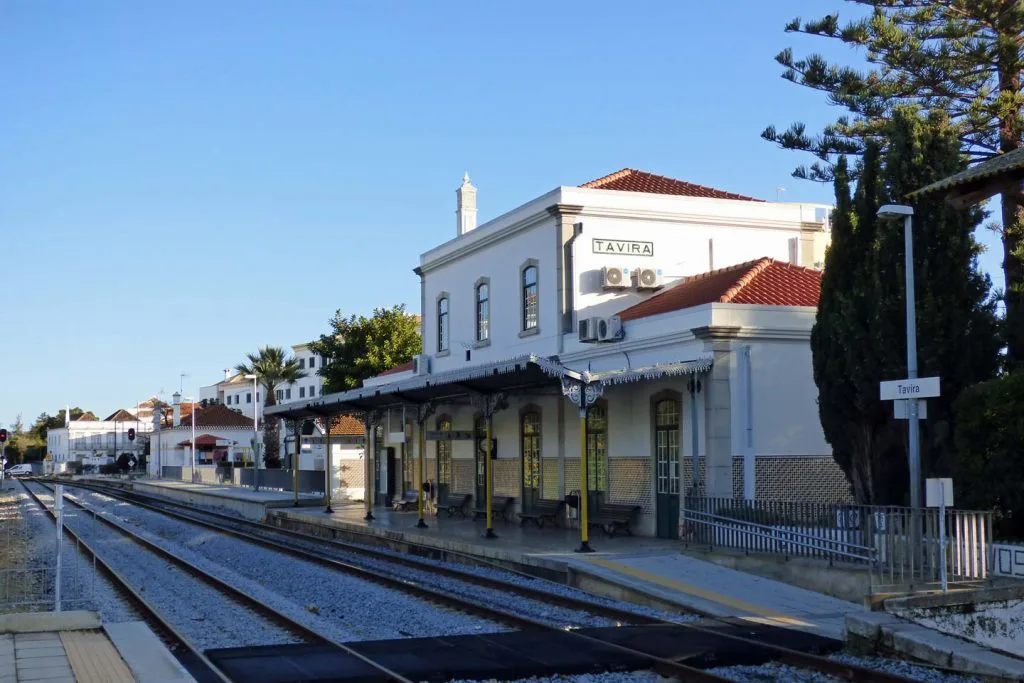
Whether you arrive by train or bus, you’ll notice something immediately: Tavira is wonderfully walkable.

  • From Tavira train station or bus station , it’s a short walk to the historic center
  • Taste Tavira AL is also within walking distance
  • No need for taxis once you’re here — everything unfolds slowly, step by step

🌿 What is the best way to get to Tavira?

So… what’s the best way?

It depends on how you want to begin.

  • Want ease? Take an Uber, Bolt or taxi
  • Want freedom? Rent a car
  • Want to ease into the Algarve slowly? Take the train

There’s no wrong choice here — only different rhythms.


✨ A final thought

The journey from Faro to Tavira isn’t just about getting from A to B. It’s your first glimpse of a different pace of life.

And whether you arrive by car, train, or a quiet ride through the salt flats — somewhere along the way, you’ll start to feel it:

Things are softer here. Slower.
And Tavira is already waiting.
Why So Many Ruins Remain Standing in the Tavira and Argavian Countryside

Why So Many Ruins Remain Standing in the Tavira and Argavian Countryside

A gentle look at Algarve heritage, land rules and rural life

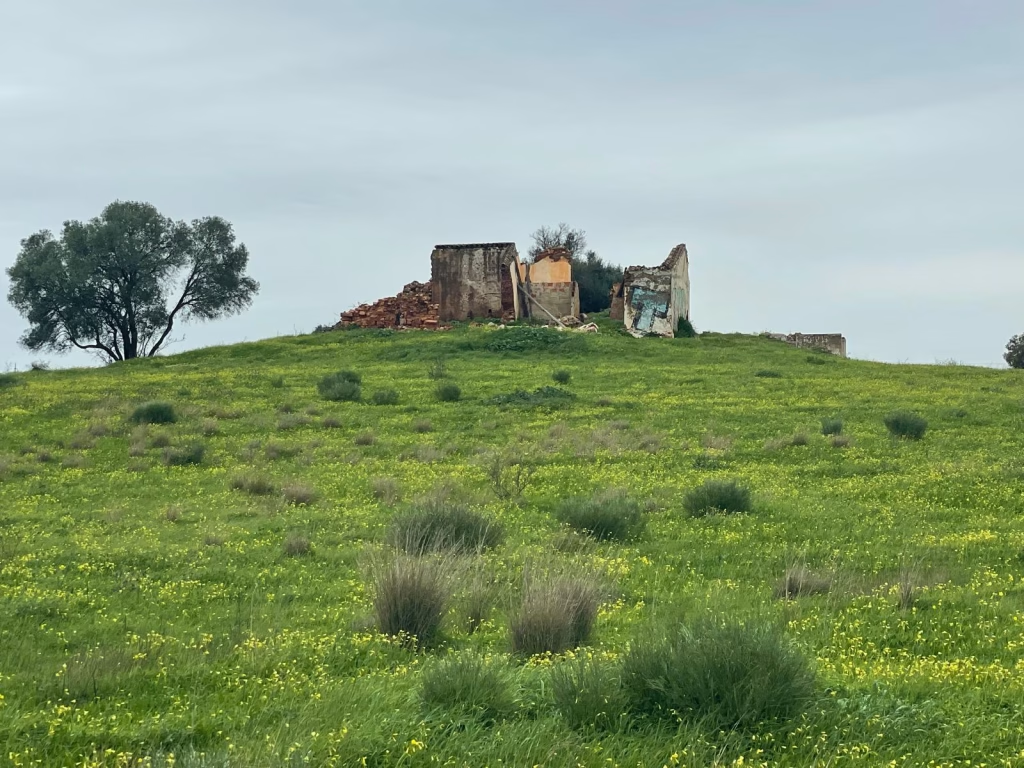
If you explore the countryside around Tavira, you will quickly notice them.
Old farmhouses without roofs. Stone walls softened by fig trees. Quiet ruins tucked between olive groves and almond orchards.

At first glance, they may seem abandoned.
But in the Eastern Algarve, these ruins are rarely forgotten. They are often carefully left standing , shaped by planning laws, protected landscapes and deep family roots.


A Ruin Often Means Legal Building Rights

In Portugal, an existing structure — even in ruins — can carry important legal value.

When a building is registered as having existed before, it may allow the owner to:

  • renovate or rebuild within the original footprint
  • restore a rural home where new construction would not be permitted

If a ruin is fully demolished, these rights may be lost.
That is why many landowners in the Tavira countryside leave walls standing. They are preserving future possibilities, not neglecting the land.


Renovation Is Easier Than New Construction

Across the Algarve countryside, planning authorities generally favour rehabilitation over new builds .

Restoring a traditional farmhouse or cottage is often:

  • easier to license
  • more in line with local planning rules
  • the only option in rural zones

Building a new house on empty land — even if privately owned — is frequently restricted, especially outside villages.


Protected Landscapes Shape the Eastern Algarve

Large parts of the land around Tavira are protected under agricultural and ecological regulations. These zones exist to preserve:

  • farmland
  • water systems
  • biodiversity
  • the open rural character of the Algarve

In these areas:

  • new construction is usually limited
  • existing rural buildings may be restored

Here, ruins become a bridge between people and landscape — a way to live lightly within nature.


Restoring a Ruin Takes Time and Patience

Renovating a ruin in the Algarve countryside is a long-term commitment. Owners often face:

  • high building costs
  • lengthy municipal procedures
  • changing regulations
  • archaeological surveys that can delay work

Many choose to wait until the time — and the budget — feels right. Until then, the ruin remains part of the land’s quiet rhythm.


Family Land and Shared Ownership

In the Tavira hills, land is often inherited across generations. Multiple heirs may share ownership, sometimes living far apart.

Without full agreement, restoration cannot begin.
The ruin stays — a visible reminder of family history still unfolding.


Low Property Taxes Reduce Pressure

Ruins usually come with low property taxes. Once restored, a home becomes more expensive to maintain and tax.

For many families, there is simply no urgency to change what already exists.


More Than Stone: Memory and Identity

Beyond regulations and economics, there is emotion.

Many ruins were once:

  • family homes
  • small farms
  • places of childhood memory

Demolishing them feels final. Leaving them standing keeps history — and possibility — alive.


A Landscape That Moves Slowly

The ruins of the Tavira countryside are not signs of neglect. They reflect:

  • respect for land protection
  • traditional planning values
  • strong family ties
  • a slower approach to change

In the Eastern Algarve, time is not wasted — it is allowed.

A Day Trip from Tavira to Ayamonte: Train, Ferry & a Taste of Spain

Sometimes the best adventures are the easiest ones. From Tavira, you can hop on a little train, glide across a river, and—just like that—you’re in Spain. Ayamonte may only be a short journey away, but it feels like you’ve slipped into another world. Think Andalusian plazas, tapas bars, and that unmistakable Spanish buzz.

Here’s how to do it without stress, car keys, or Google Maps yelling at you.


🚆 Tavira to Vila Real de Santo António by Train

Start your morning with the train from Tavira to Vila Real de Santo António . It’s a short, scenic ride—just under 30 minutes—and tickets hover around €3. Simple, no fuss, and you’ll be in Vila Real before your coffee’s even cooled.

(Pro tip: check train times here)


⛴️ Vila Real to Ayamonte by Ferry

From Vila Real’s station, it’s a quick stroll to the ferry terminal. And this is where the fun begins—the little ferry across the Guadiana River feels like a rite of passage. In 15 minutes, you’re stepping off the boat into Ayamonte , Spain.

The crossing costs just a couple of euros, but the view? That’s priceless. Watch the Portuguese side slowly fade behind you as Spain comes into focus. (Check ferry times here: Ayamonte ferry info)

One little detail to keep in mind: Spain is on a different clock. When you step off the ferry in Ayamonte, it’s suddenly an hour later. Handy if you’re hungry—lunch comes quicker than expected. Just remember to adjust your watch so you don’t miss the ferry back to Portugal.


🌿 What to See in Ayamonte

Ayamonte is compact enough to explore on foot, which is perfect after a lazy river crossing.

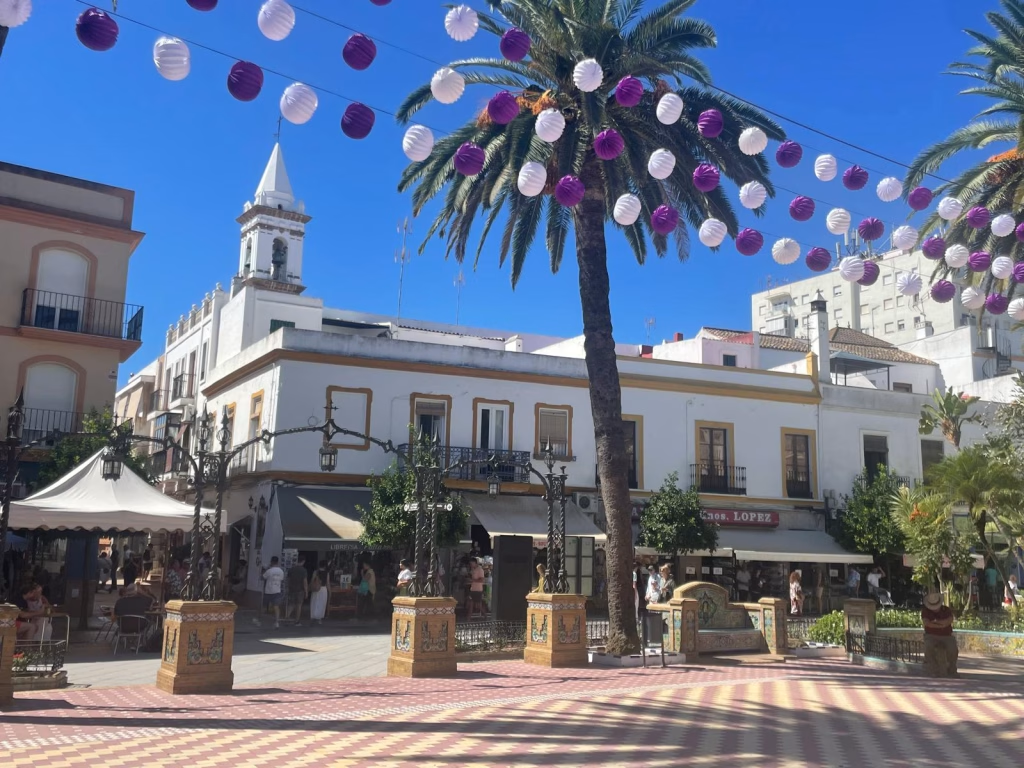
  • Plaza de la Laguna — the heart of town, buzzing with cafés and chatter.
  • Iglesia de Nuestra Señora de las Angustias — quiet, beautiful, and very Andalusian.
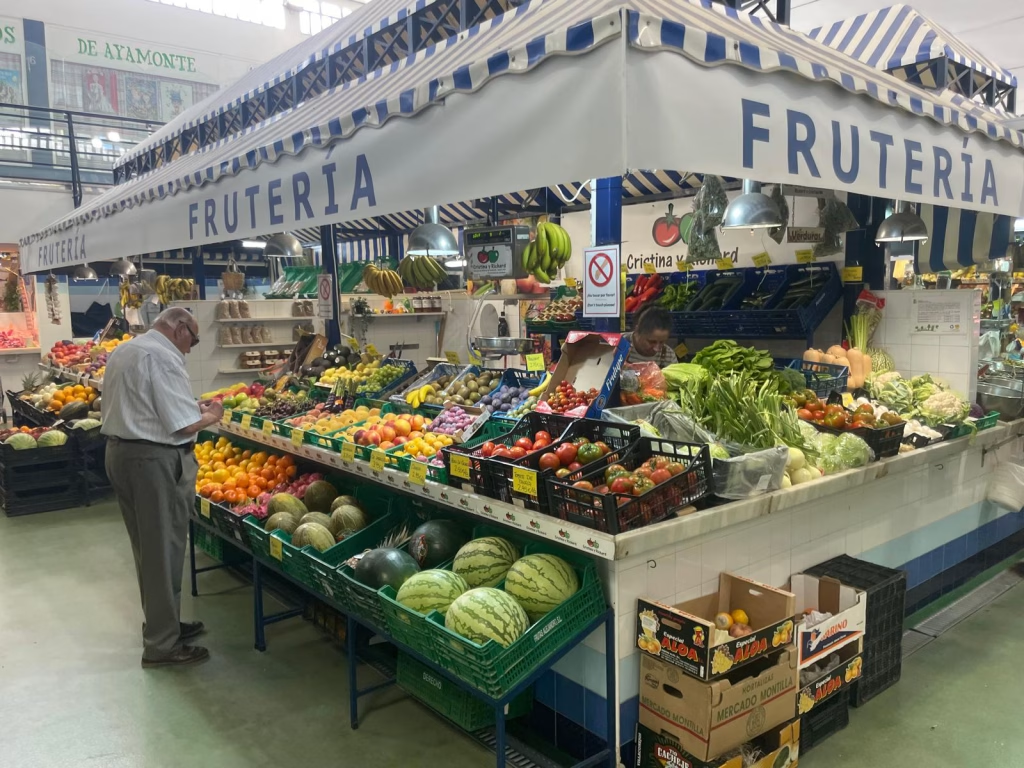
  • Mercado de Abastos — peek into daily life with stalls of fresh fish, jamón, and fruit.

Honestly, half the joy is just wandering. Whitewashed alleys, tiled facades, the slow rhythm of Spanish life—it all feels wonderfully different from Tavira, yet comfortingly close.


🍴 Where to Eat in Ayamonte

This is Spain, so food is non-negotiable. Pull up a chair, order a glass of tinto de verano , and don’t rush it.

Try:

  • Pescaito frito — crispy fried fish, a local favourite.
  • Jamón Ibérico with pan con tomate — simple but unforgettable.
  • Or go bold with a seafood rice if you’ve got time to linger.

Restaurants cluster around the plazas and the riverfront, so you won’t have to look far. And trust me, even the “random little bar on the corner” will probably serve you something memorable.

🍷 My Favourite Lunch Spot in Ayamonte: LPA

If there’s one place in Ayamonte that locals whisper about, it’s LPA (La Puerta Ancha) . You’ll recognize it by the tall wooden door —slightly mysterious from the outside, but once inside you’ll find a bright, elegant space that feels worlds away from the bustle of the plaza.

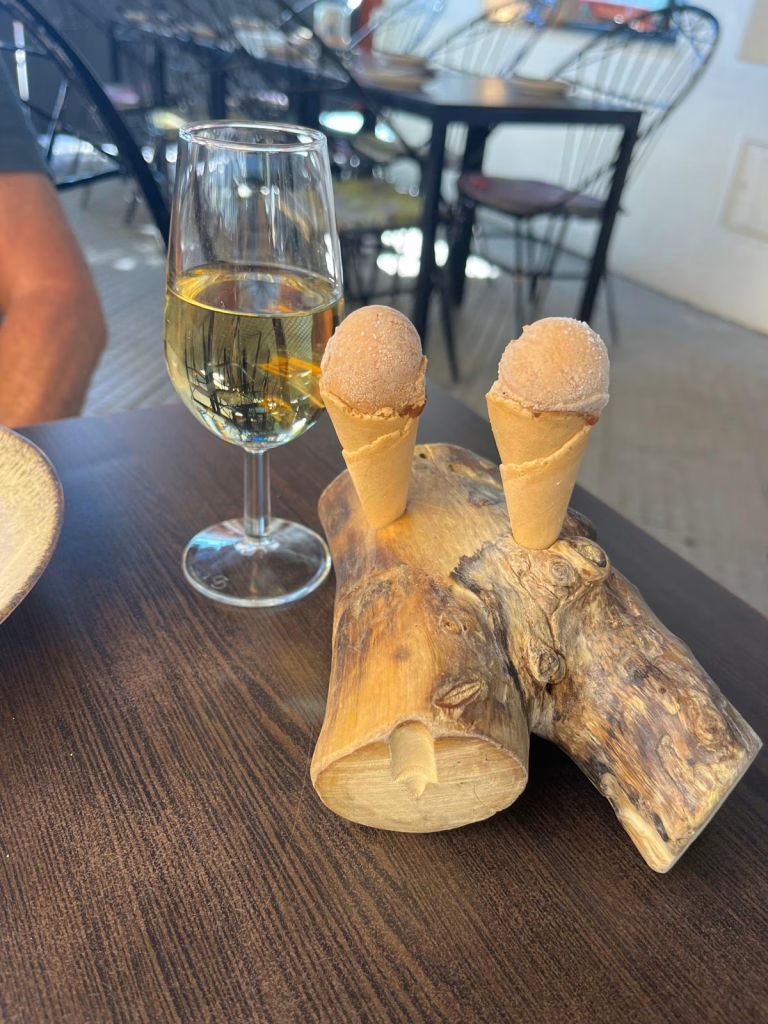
The kitchen here loves to surprise. You might start with their playful foie gras “ice cream cones” or the quirky calamari croquetas —a clever nod to the Bitterballen of Dutch tapas lovers. From there, move on to bigger plates like grilled octopus with silky potato purée , tuna tartare with avocado , or the melt-in-your-mouth iberico pork cheeks slow-cooked in red wine . And whatever you do, save room for dessert—their homemade cheesecake is legendary.

It’s modern Spanish cooking at its best: creative without being fussy, comforting without being boring. Pair it all with a crisp Albariño or a bold Rioja or even a local Manzanilla Fino and you’ll probably wish the ferry back ran a little later.

Book in advance.


⏱️ Sample Itinerary

  • 08:06 — Train from Tavira to Vila Real de Santo António
  • 08:30 — Stroll to the ferry dock
  • 08:45 — Ferry to Ayamonte
  • 09:00–12:30 — Wander, sightsee, shop the market
  • 12:30 — Long Spanish lunch (jamón, wine, repeat)
  • Afternoon — Explore a little more, ferry back, train home

By 4 PM you’re back in Tavira with a sun-kissed glow and stories to tell.


✨ Why This Day Trip Works So Well

Because it’s easy. No car. No stress. Just train, ferry, tapas —and you’ve ticked off two countries in one day. It’s the kind of trip where you lean back, breathe in the Andalusian air, and think: why didn’t I do this sooner?


📌 Quick Links


So, next time you’re in Tavira and craving a dash of Spain, don’t overthink it. Ayamonte is just around the corner—by train, by ferry, and by appetite.


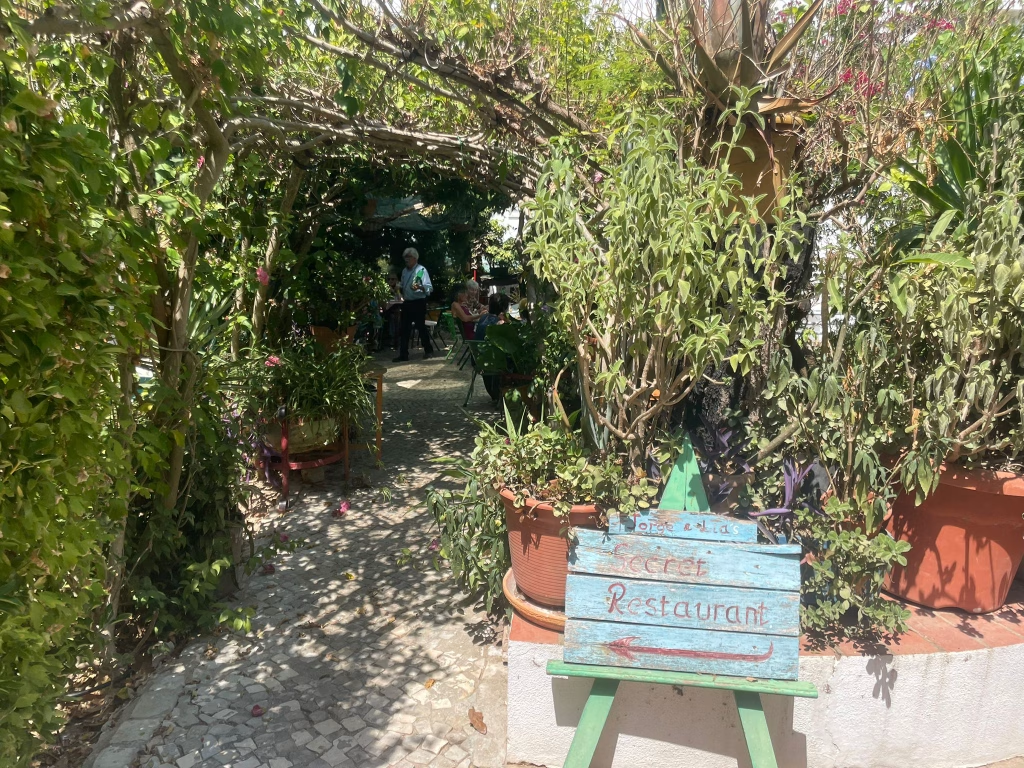
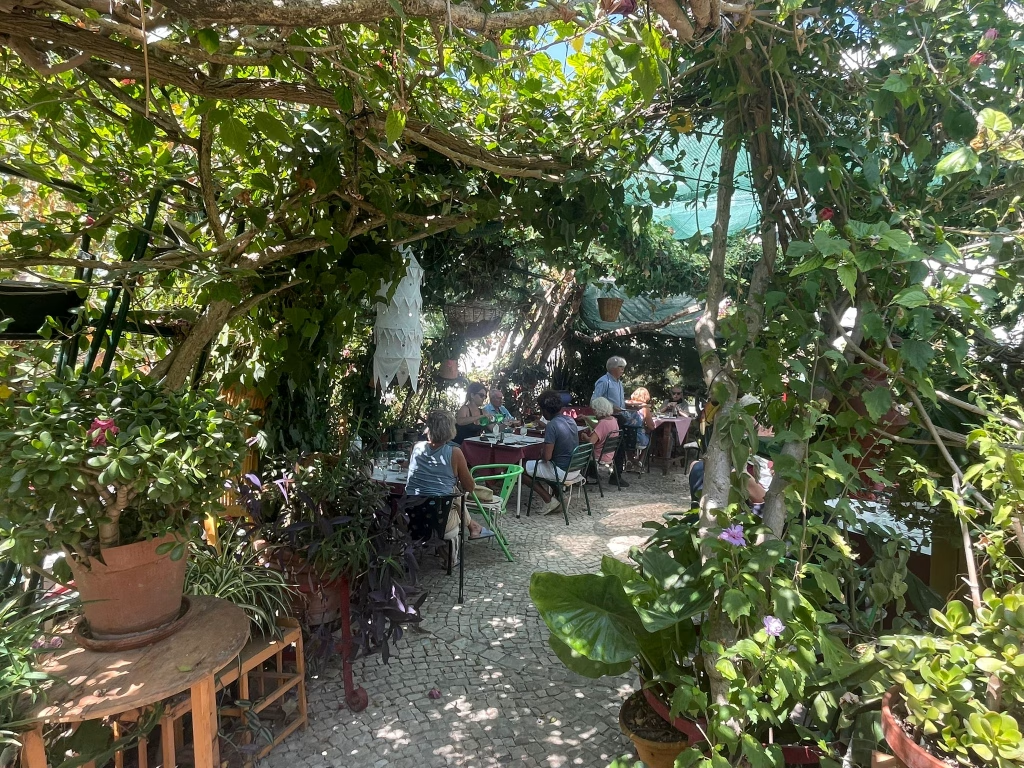
A Little Secret Garden Restaurant Around the Corner: Jorge & Lia

Some places in Tavira don’t announce themselves. They don’t need to. They sit quietly, waiting for you to wander by—curious enough to enter. Jorge & Lia is one of those places.

If you come in from Rua Manuel Virgino Pires , you’ll pass the old stone water well. Blink, and you might miss it. But step a little further and—surprise—you slip straight into Tavira’s very own Secret Garden Restaurant . Shaded by trees, surrounded by greenery, it feels almost like stumbling into a hidden courtyard in another time. A reviewer once called it “a secret well kept in Tavira”, and I couldn’t agree more.


🌿 Why It Feels Special

From the outside, it might look like just another simple restaurant. Entering from Rua do Alto do Cano 19 , you step first into the churrasqueira-style dining room. Nothing unusual there—plain, straightforward. But the real surprise is waiting out back. Step through and suddenly you’re in the garden, where a handful of tables sit beneath the trees. The atmosphere shifts completely: calm, unhurried, almost secret.

You might catch loungy music floating in from the square—never too loud, just a soft backdrop that blends perfectly with the clinking of glasses and the rustle of leaves. It’s the kind of place where lunch doesn’t feel rushed. You sit, you sip, you chat, you breathe. And before you know it, you’ve stayed much longer than you planned.


🍴 What to Order

The menu changes, but a few things stand out:

  • The lamb —locals rave about it, perfectly cooked, full of flavour.
  • Fresh fish , straight from the market, often grilled with just the right touch.
  • The dishes with the Mushroom Sauce , “com molha de cogumelas
  • Seasonal dishes that reflect what’s available locally.

Lia’s cooking has that combination of simplicity and care that makes every dish feel homely but never heavy. It’s honest food, made with heart.


👋 The Hosts

And then, of course, there’s Jorge. Always around, always present—but never hovering. Someone once wrote “attentive but not intrusive”, and it couldn’t be more true. He welcomes you, checks in just enough, and then steps back so you can enjoy the moment.

Together, Jorge and Lia have created something that feels both personal and relaxed. A place that doesn’t shout for attention, but quietly earns it.


🍷 Why I Love It

For me, it’s the location. The restaurant garden is tucked into one of the most popular neighbourhoods for expats and visitors to Tavira, just separated to the historic center by the railway. And almost around the corner from Taste Tavira AL , but somehow it feels miles away. You walk passed the inner garden of the condominium, you cross the street, and suddenly you’re tucked into this peaceful garden with a glass of vinho branco in hand. It’s like slipping into your own little world—without ever leaving the centre of town.

That balance—close yet hidden, casual yet special—is what makes Jorge & Lia one of Tavira’s best-kept secrets.


✨ Final Word

So if you’re strolling through Tavira, looking for a place to slow down, eat well, and feel just a little spoiled—try Jorge & Lia . Go for lunch, stay for coffee, maybe even linger over dessert. Just don’t tell too many people. Some secrets are best discovered slowly.