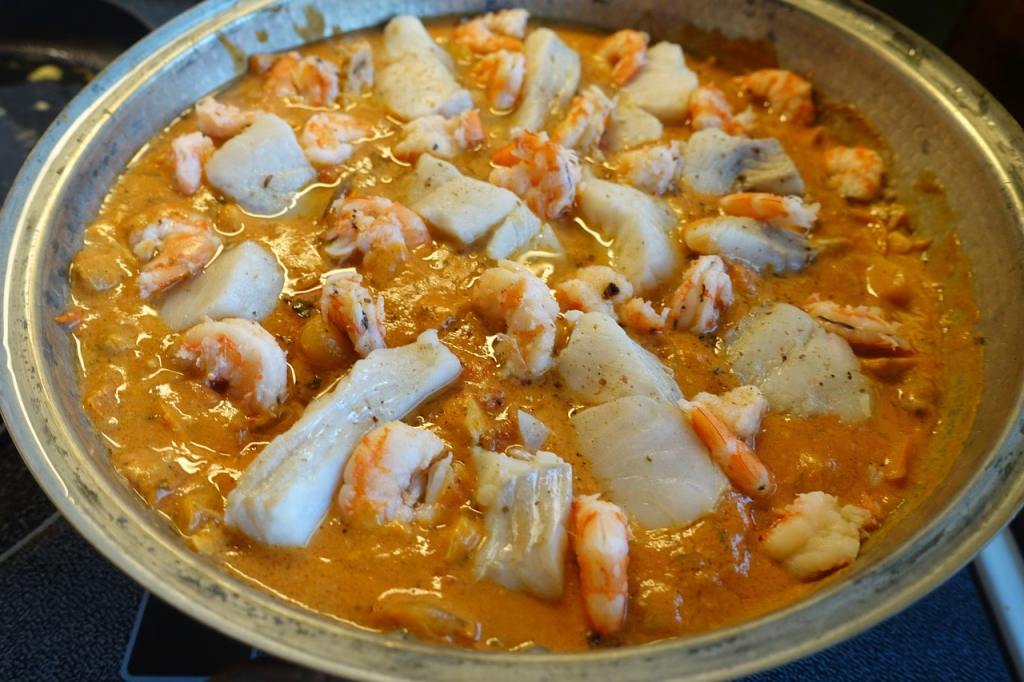
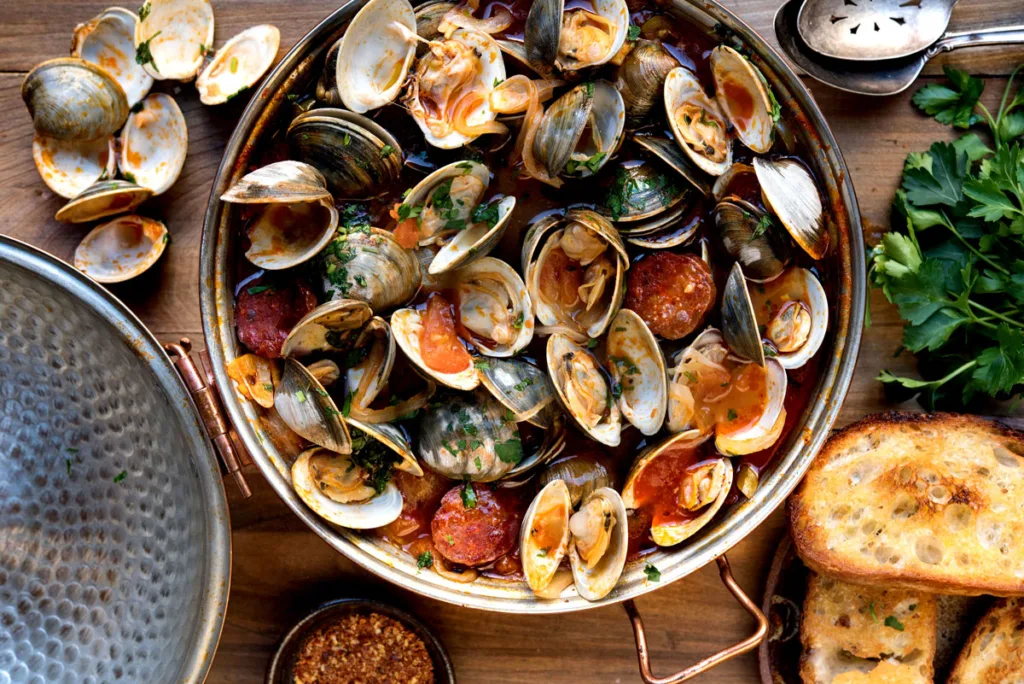
The Cataplana is more than just a dish — it’s a symbol of Algarve’s culinary heritage. Named after the unique clam-shaped copper pan in which it’s cooked, the Cataplana embodies centuries of history, cultural fusion, and culinary ingenuity. Whether filled with seafood, pork, or vegetables, this dish continues to bring people together around the table.
Its origins date back to the Moorish occupation of southern Portugal, between the 8th and 13th centuries. The Moors brought with them not only spices like cinnamon and cumin but also advanced metalwork and cooking techniques. Historians believe the Cataplana pan was inspired by the tagine — a North African vessel designed to preserve moisture and flavor during long cooking.
The Cataplana dish itself reflects the Algarve’s abundance: clams, prawns, squid, and fresh fish are often combined with chorizo, peppers, onions, garlic, and a splash of white wine. Cooked inside the sealed pan, all the flavors meld together into a rich, fragrant stew. It’s slow, intentional cooking that captures the essence of both land and sea.
While many tourist restaurants may offer a version of the dish, locals in Tavira know where to go for the real thing. Ask around and you’ll hear glowing recommendations for places like Matias , just beside the bridge, or Zeca da Bica and Água Salgada near the market. These are the kinds of spots where locals and expats return again and again for honest, traditional Cataplana — prepared with care and without compromise.
If you’re seeking an authentic taste of the Algarve, start with the Cataplana. Not only is it delicious — it’s also a meal that tells the story of centuries of coastal culture, shaped by the sea and seasoned by history.
Cataplana | Image by Mogens Petersen from PixabayCataplana | Image unknown Public domain
For those staying in Tavira and looking to escape the coast for a day, a drive inland to the historic villages of Alcoutim and Mértola offers a completely different side of the Algarve – one shaped by river valleys, whitewashed hill towns, and a quiet echo of frontier history.
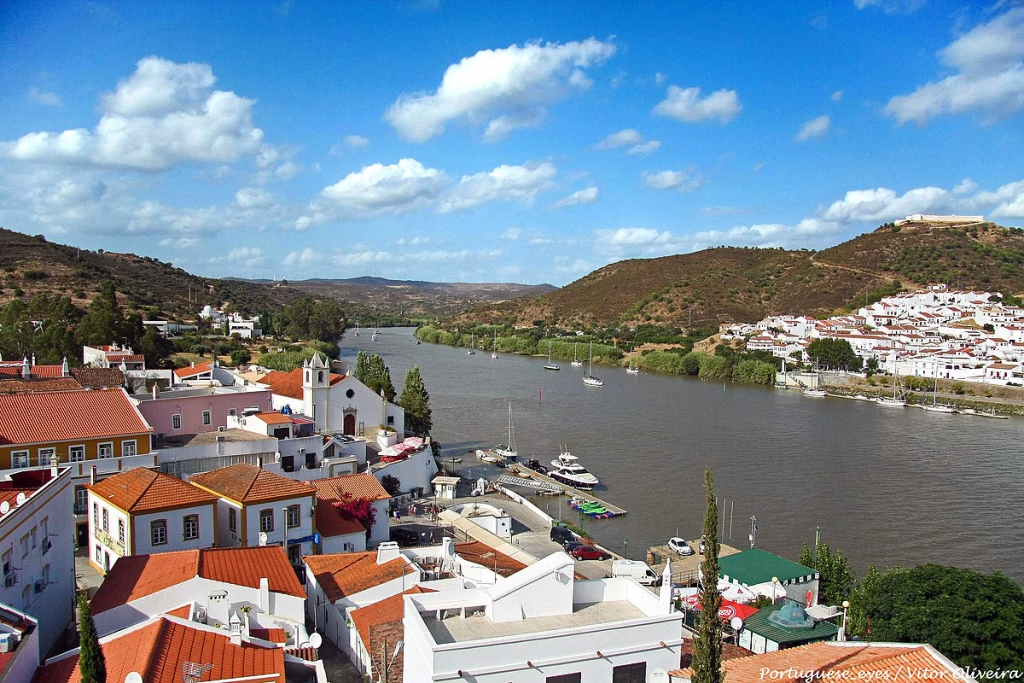
Start your journey heading east from Tavira along the N125 or A22 towards Castro Marim and then north along the N122, passing rolling hills and cork oak forests until you reach Alcoutim , a tranquil village on the banks of the Guadiana River . Directly across the water lies Sanlúcar de Guadiana , its Spanish twin, and the two towns have shared centuries of peaceful coexistence – even exchanging festivals and customs. From the waterfront promenade in Alcoutim, you’ll enjoy beautiful views across to Spain, while the castle ruins above the village offer panoramic vistas and a small archaeological museum worth visiting.
But perhaps the most thrilling way to experience the border is not by boat or bridge – but by zipline . From Sanlúcar, adrenaline-seekers can launch themselves across the Limite Zero zipline , the only cross-border zipline in the world . In just under a minute, you’ll fly 720 meters across the river at speeds of up to 80 km/h – landing back in Portugal… and in a different time zone. (Yes, Spain is an hour ahead!)
After your ride (and the small boat ride back to Alcoutim), consider continuing north to Mértola , a hilltop village nestled in the Guadiana Valley Natural Park. Its layered history includes Roman ruins, a former mosque now serving as the main church, and winding cobbled streets with traditional houses. This is one of the most atmospheric towns in inland Portugal — and a photographer’s dream.
Don’t forget to enjoy lunch at a riverside taverna, where dishes like pork with clams , grilled black pork , or wild boar stew reflect the hearty Alentejan cuisine of the region.
From Mértola, you can return to Tavira (via Martinlongo and Cachapo), the scenic N122, N124 and N397 routes — a leisurely drive through the hills, with the occasional stork nest or shepherd crossing your path.
Mertola | Image zone41, CC BY-SA 2.0, via Wikimedia CommonsAlcoutim | Image Vitor Oliveira from Torres Vedras, PORTUGAL, CC BY-SA 2.0, via Wikimedia Commons
Just a short drive inland from Tavira lies a patchwork of orchards, whitewashed villages, and winding roads where history and rural life meet. This gentle journey takes you through Santo Estêvão and Santa Catarina da Fonte do Bispo , showcasing the Algarve’s timeless charm — from decorated façades to old wells and olive oil traditions.
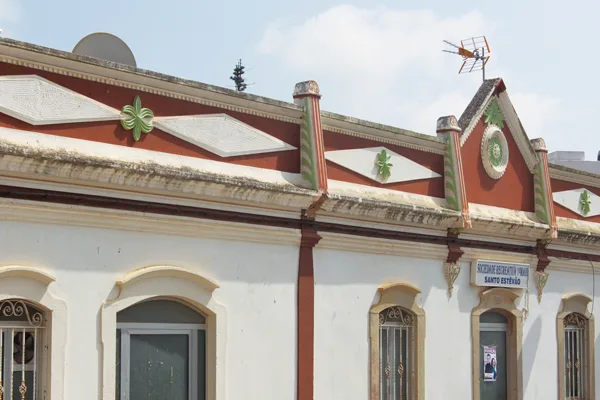
Start your drive from the Rotunda da Vela on the N125 and take the road towards Santo Estêvão . The landscape soon shifts to dry orchards with carob, olive, and almond trees , typical of the region’s barrocal zone. As you approach the village, stop to explore the Main Church of Santo Estêvão , a serene 18th-century structure built upon a medieval chapel. Inside, you’ll find baroque altar pieces and a handful of 17th-century tombstones — a quiet testament to centuries of rural devotion. Around the church square, take time to admire the elegant platbands , the decorative cornices above windows and doors, often unique to each house and handcrafted by artisans of another era.
From here, follow the signs to Santa Catarina da Fonte do Bispo , a village nestled among hills dotted with fig trees and old terraced fields. On your way, you may spot tile workshops and olive groves that once powered the region’s rural economy. In the village, visit the Museum of the Cooperativa Agrícola , which preserves a historic olive press and offers insight into the area’s long tradition of oil production. The Main Church , with Manueline and Baroque features, houses a dramatic “Last Judgement” painting inside its cool stone walls.
For a deeper connection to the land, take one of the rural detours toward upland hamlets like Alcaria do Cume , the highest point in the Tavira municipality. The surrounding views stretch across hills and orchards, offering a different side of the Algarve — quiet, authentic, and steeped in tradition. Several of these side roads lead to picnic parks in forested clearings, perfect for a pause surrounded by nature.
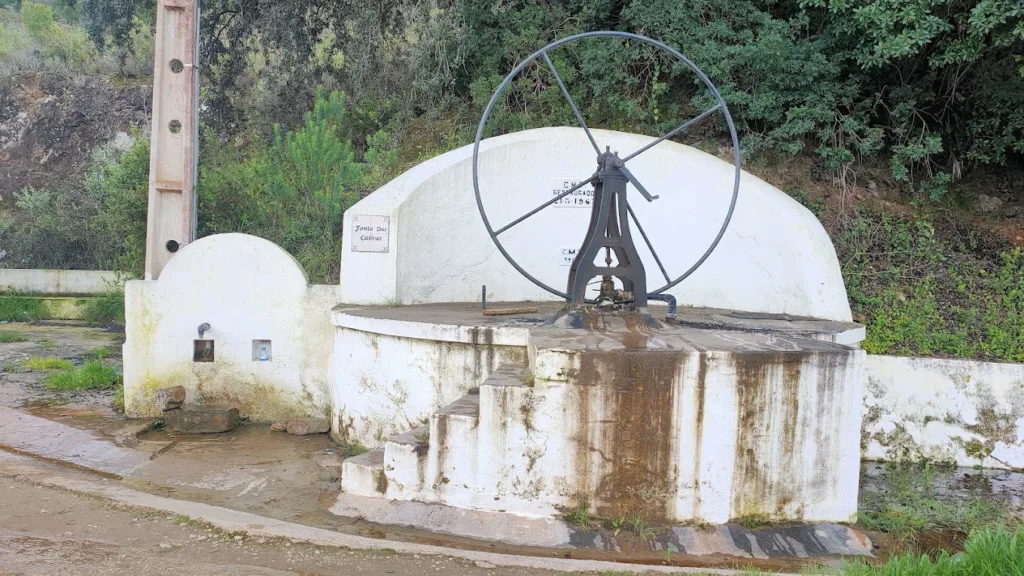
Back on the main road, your route can circle through Fonte das Cabras , a stone spring with crystal-clear water that has never dried up, even in drought years. Follow the flow of the Gilão River , whose waters wind through orange groves and fig orchards on their way to Tavira, offering a tranquil end to this rural excursion.
Whether you’re after quiet churches, agricultural heritage, or just the soothing rhythm of countryside roads, this loop through the hills and valleys north of Tavira makes for an enriching half-day trip.
platibanda santo estevao tavira | Image Taste TaviraFonte das Cabras
Start your journey right from the doorstep of Taste Tavira AL and step back in time through the winding streets of Tavira, where the city’s Moorish past lingers in its architecture, urban design, and cultural symbols. Though more than seven centuries have passed since the Christian reconquest of 1242, the legacy of al-Andalus remains etched into the soul of this peaceful Algarve town.
A Descent Through Time
Begin your walk down Rua Manuel Virgínio Pires , a quiet residential lane that descends gently toward the railway underpass. Passing the Bombeiros Voluntários , you enter a lesser-traveled route into the heart of Tavira’s old town — one that avoids the traffic and invites a slower pace, perfect for spotting architectural clues from the past.
Here, whitewashed houses with flat, cubic roofs, modest patios, and high-walled privacy evoke building styles inherited from Moorish settlers. These forms, brought over from North Africa and adapted for the Iberian climate, still shape the visual identity of Tavira today.
Winding Streets and Ancient Layouts
Continue through Rua da Liberdade and Rua José Pires Padinha , two sinuous streets that reflect the labyrinthine layout typical of Islamic cities. Narrow, shaded, and pedestrian-friendly (except on high heals), they recall a time before urban grids — when shade and proximity were more important than carriages and symmetry.
Many of the facades may have changed, but the skeleton of the Moorish medina remains: small-scale buildings huddled close together, protecting against the sun and inviting neighbors to linger and talk.
Echoes in Details: Arches, Tiles, and Twin Chimneys
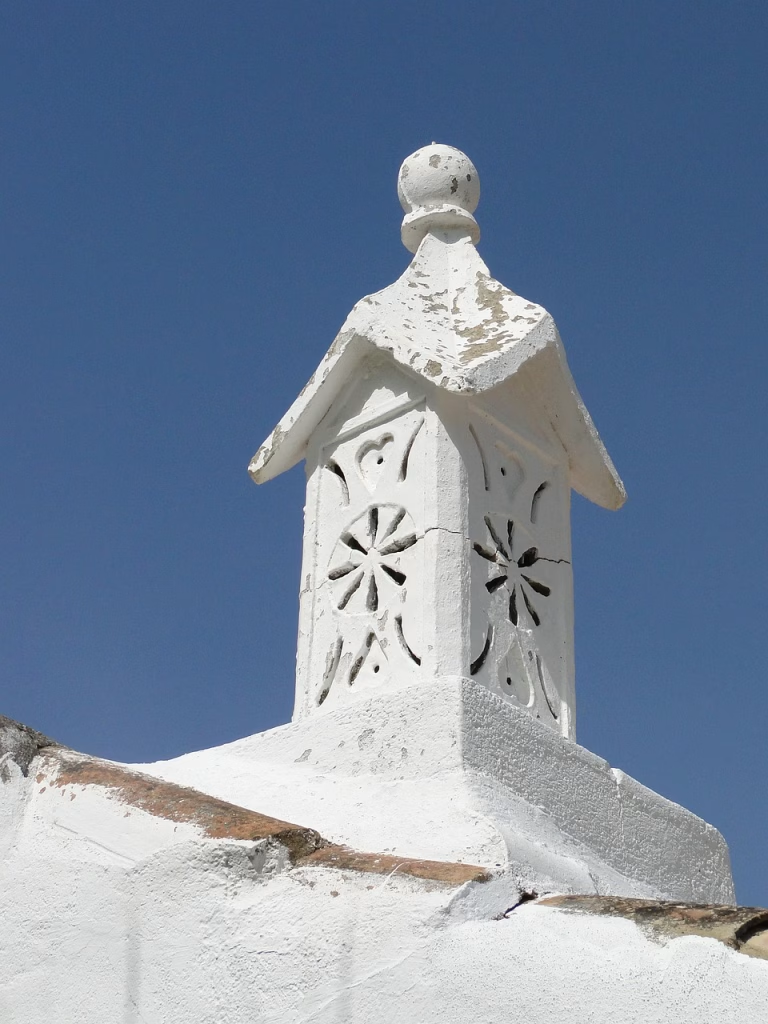
Climb gently toward the Igreja da Misericórdia and Castelo de Tavira , and observe the horseshoe arches , azulejos with geometric patterns, and ornamental tilework reminiscent of Islamic craftsmanship. Many of Tavira’s chimneys — especially the iconic twin chimneys — may also trace their form back to North African influences, blending beauty with function.
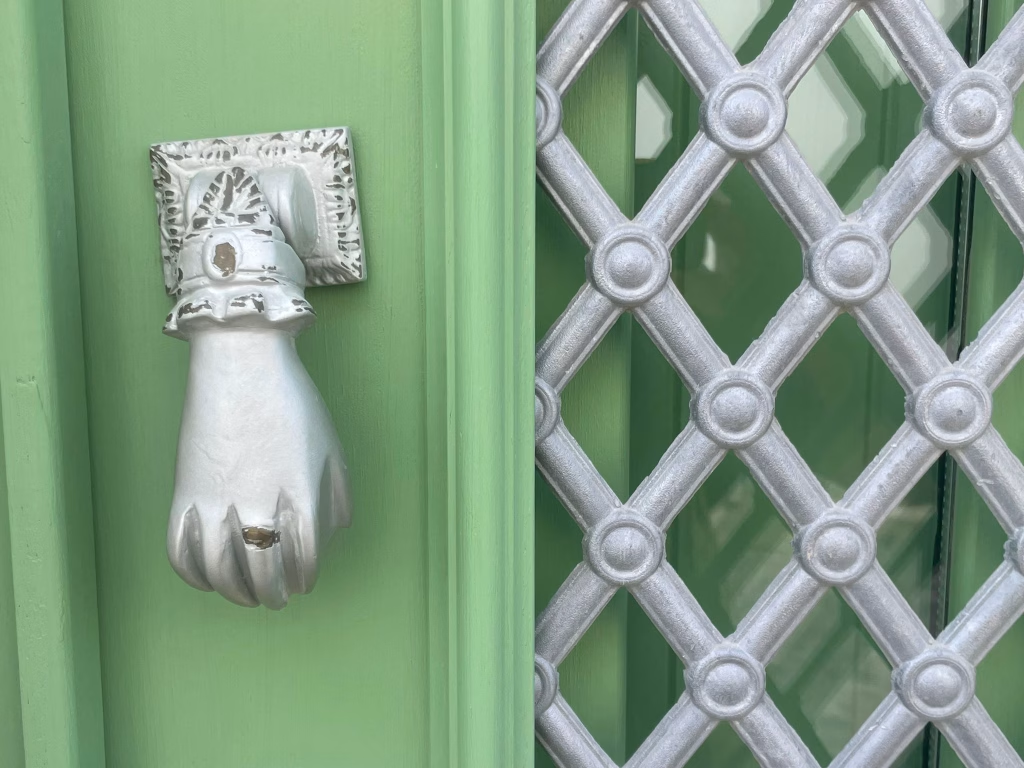
In artisan shops or private doorways, you may also spot the Hand of Fatima (Mão de Fátima or Hamsa): a symbolic palm-shaped amulet said to protect homes from harm. This enduring symbol, shared by both Islamic and Sephardic Jewish traditions, reflects the spiritual tapestry of the Algarve.
The Bridge That Connects Eras
Eventually, your route brings you to Tavira’s iconic bridge over the Gilão River . Though commonly referred to as the “Roman Bridge,” most scholars agree it was built or extensively rebuilt during the Moorish period , possibly on earlier Roman foundations. With its seven arches and elegant stone construction, the bridge connects not only the two sides of the town — but also the layered epochs of its history.
Whether Roman in origin or Islamic in spirit, it remains one of Tavira’s most poetic landmarks: a perfect spot to pause, take in the view, and reflect on the town’s rich and overlapping identities.
End at the Islamic Museum: A Deeper Dive into History
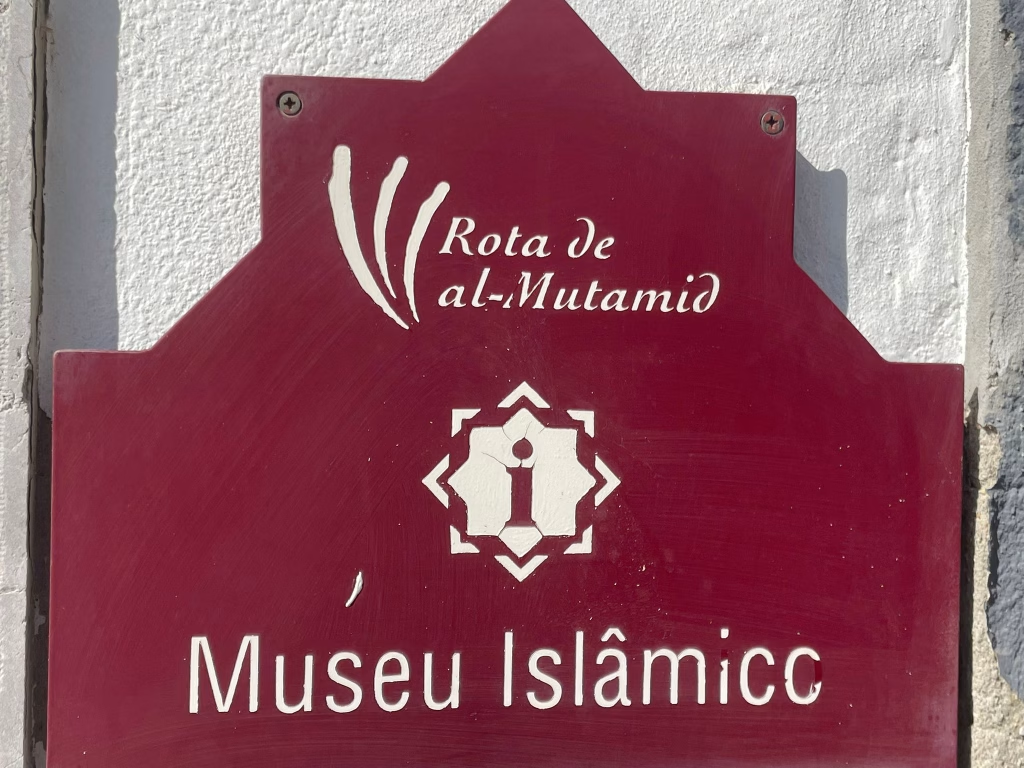
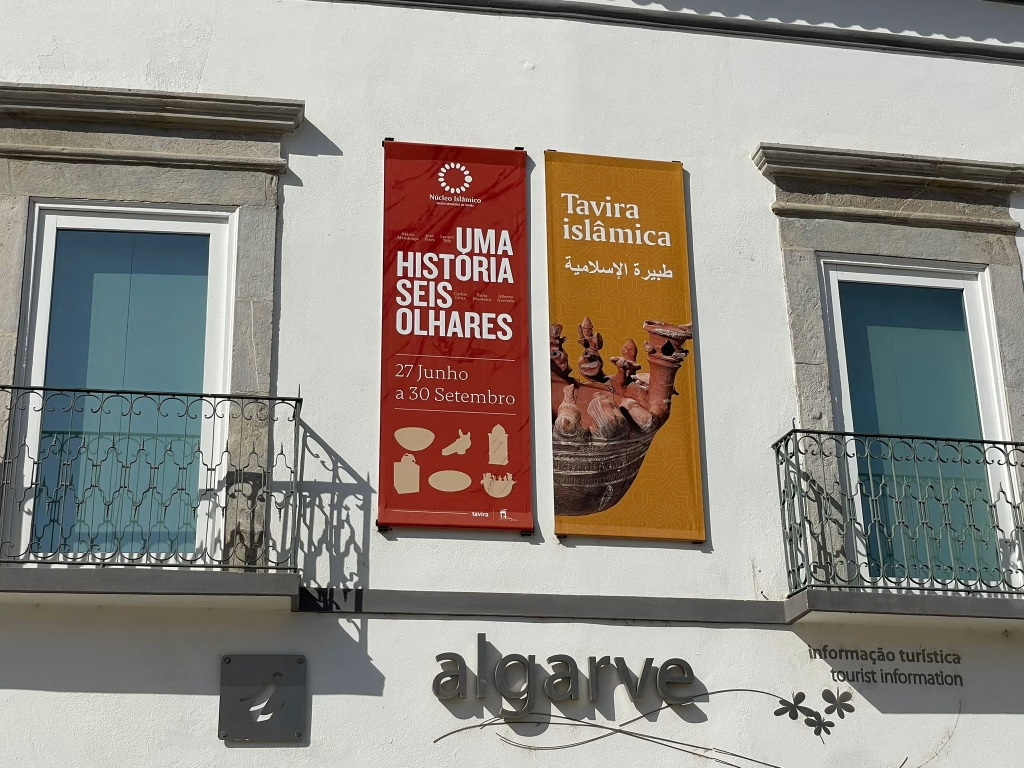
Conclude your walk with a visit to the Islamic Museum of Tavira . This museum showcases artifacts from the period of Moorish rule, including ceramics, tools, and religious objects unearthed during local excavations.
One of the highlights is the “Vaso de Tavira” , a rare 11th-century ceramic piece that may have had symbolic or ritual significance. The museum not only offers insight into daily life under Islamic rule but also contextualizes how this heritage continues to shape the Algarve’s cultural landscape.
Tavira also forms a poetic waypoint along the famed Ruta de al-Mutamid , a cultural itinerary that traces the life and legacy of the 11th-century poet-king of Seville. Though Tavira was not central to his life, its architectural and cultural echoes place it firmly within the spirit of that lost Andalusian world.
islamic museum | image Taste Tavirahands of fatima | image Taste TaviraChimney | Image by Pedrocas from Pixabayislamic museum | image Taste Tavira

 English (UK)
  Nederlands
  Français
  Español
  Português