 English (UK)
  Nederlands
  Français
  Español
  Português
It may look like just water and sandbars from the shore. But step a little closer — and you’ll discover one of Europe’s most fascinating ecosystems quietly pulsing with life.
Welcome to Ria Formosa, Tavira’s secret wild heart.
What Exactly Is the Ria Formosa?
Ria Formosa is more than just a lagoon — it’s a living, breathing ecosystem.
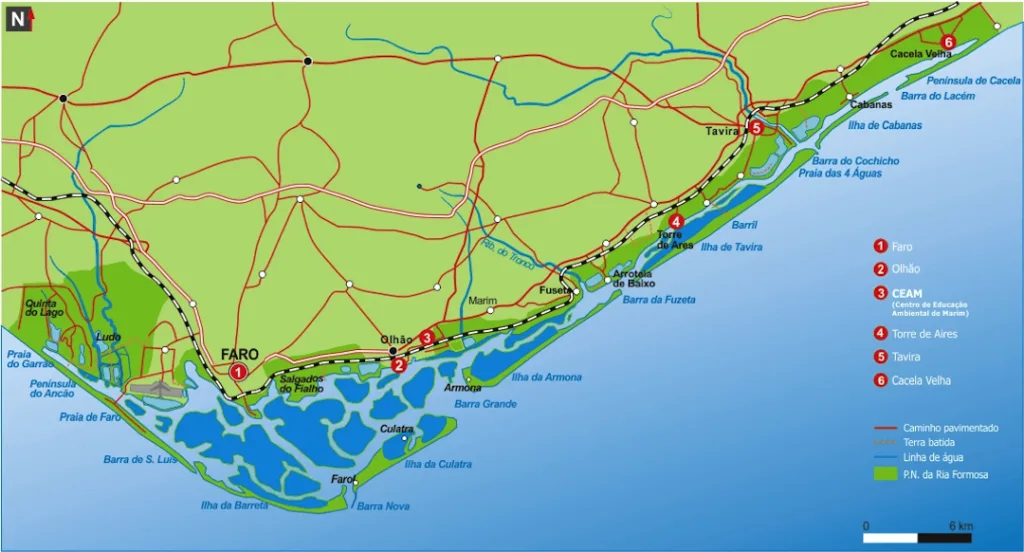
Stretching along 60 km of Portugal’s Algarve coast , the Ria Formosa Natural Park is a protected labyrinth of saltwater channels, marshes, barrier islands , and tidal flats . Shaped by tides and always shifting, it’s a place where nature leads the dance.
Tavira sits right on its edge, offering the perfect, easy gateway into this stunning natural wonder.
Best Ways to Explore Ria Formosa: By Boat or On Foot
🚤 By Boat: Guided Tours and Eco-Friendly Options
For first-timers, a guided boat trip is the ideal introduction:
- Short tours (1–2 hours): Cruise past Tavira Island, oyster beds, and flamingo zones.
- Half-day trips: Swim or enjoy lunch on the islands, or visit Culatra , a charming, car-free fishing village.
- Eco-tours & solar boats: Perfect for birdwatchers seeking a quiet, sustainable experience.
Pro Tip: Book a smaller boat or catamaran for a more personal feel — and don’t forget your binoculars!
🚶♀️ On Foot: Walk the Edges of the Lagoon
If you prefer dry land:
- Tavira to Praia do Barril: Walk or bike the boardwalk across marshes. You’ll see oyster beds, crab tracks, mudflats, and end at the intriguing Anchor Cemetery .
- Manta Rota to Cacela Velha: Experience the Ria’s final stretch, surrounded by sand dunes, pine trees, and vast skies — it feels like the edge of the world.
The Battle to Preserve Ria Formosa’s Unique Ecosystem
Near Manta Rota, the lagoon narrows and silts up — a natural process intensified by rising sea levels, reduced sediment flow , and urban development . Some channels are now only accessible at high tide, putting pressure on this delicate ecosystem.
Still, the Ria Formosa’s shimmering flats, blue crabs, and solitary birds tiptoeing across silver puddles remain a magical sight.
The Magic of Tides: Life in Constant Motion
At low tide , the Ria becomes a muddy wonderland, alive with tiny crabs, probing wading birds, and gleaming salt flats.
At high tide , water floods the channels, bringing fish, mollusks, and floating seagrass meadows. Boats drift gently, and the lagoon turns serene and still.
Tip: Time your visit to experience both — the contrast is mesmerizing.
Birdwatching Paradise: Over 200 Bird Species
Whether you’re an expert or just love nature, the birdlife here will amaze you. Look out for:
- 🦩 Pink flamingos
- 🖤 Black-winged stilts
- 🤍 Graceful egrets
- 🦅 Migratory visitors like ospreys and kingfishers
Spring and autumn are peak seasons for migratory birds, especially in the soft morning or golden evening light.
Taste the Flavors of Ria Formosa
The lagoon isn’t just beautiful — it’s delicious.
Local restaurants in Santa Luzia and Tavira Island serve fresh oysters, clams, mussels, razor clams, and octopus .
Don’t miss:
- 🧄 Amêijoas à Bulhão Pato – clams in garlic-cilantro sauce
- 🐙 Polvo à Lagareiro – roasted octopus with olive oil and potatoes
- 🦪 And always, the oysters!
When to Visit Ria Formosa
- Spring & Autumn: Best for birdwatching and fewer crowds.
- Summer: Warm water, more tours, stunning sunsets — but busier and hotter.
- Winter: Quiet, beautiful light for photography, and yes — flamingos.
A Protected Natural Treasure
Ria Formosa is a designated Natural Park and part of the Natura 2000 network , emphasizing its importance for biodiversity and conservation.
Please respect this fragile ecosystem during your visit — it’s a rare and precious habitat.
Final Tip: Don’t Just Look — Listen
The Ria Formosa isn’t loud. It murmurs.
Listen for the soft rush of tides, the flick of fish tails, and the call of birds overhead. It’s nature’s whisper — and once you hear it, you’ll want to return again and again.