Discover Ria Formosa: Tavira’s Hidden Natural Gem

It may look like just water and sandbars from the shore. But step a little closer — and you’ll discover one of Europe’s most fascinating ecosystems quietly pulsing with life.

Welcome to Ria Formosa, Tavira’s secret wild heart.


What Exactly Is the Ria Formosa?

Ria Formosa is more than just a lagoon — it’s a living, breathing ecosystem.

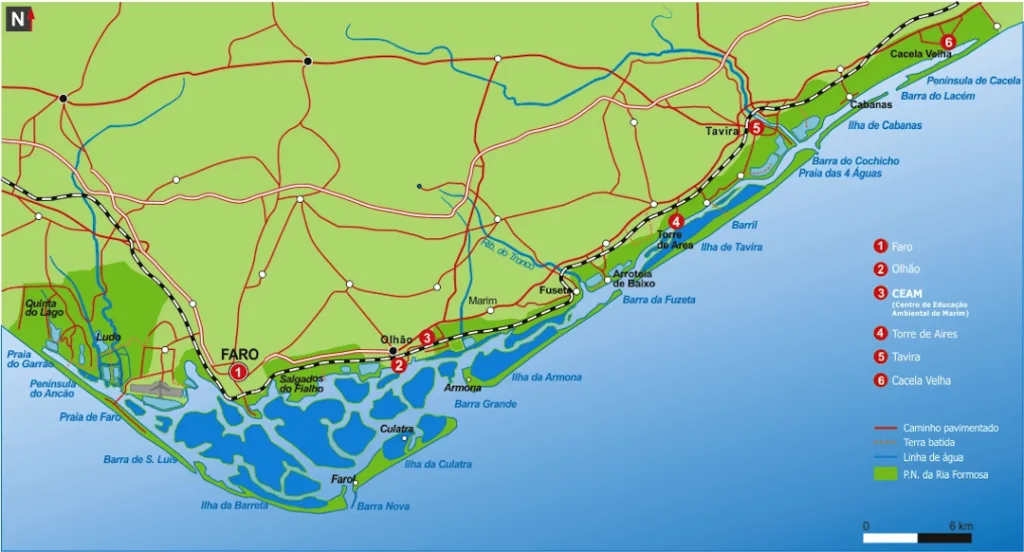
Stretching along 60 km of Portugal’s Algarve coast , the Ria Formosa Natural Park is a protected labyrinth of saltwater channels, marshes, barrier islands , and tidal flats . Shaped by tides and always shifting, it’s a place where nature leads the dance.

Tavira sits right on its edge, offering the perfect, easy gateway into this stunning natural wonder.


Best Ways to Explore Ria Formosa: By Boat or On Foot

🚤 By Boat: Guided Tours and Eco-Friendly Options

For first-timers, a guided boat trip is the ideal introduction:

  • Short tours (1–2 hours): Cruise past Tavira Island, oyster beds, and flamingo zones.
  • Half-day trips: Swim or enjoy lunch on the islands, or visit Culatra , a charming, car-free fishing village.
  • Eco-tours & solar boats: Perfect for birdwatchers seeking a quiet, sustainable experience.

Pro Tip: Book a smaller boat or catamaran for a more personal feel — and don’t forget your binoculars!


🚶‍♀️ On Foot: Walk the Edges of the Lagoon

If you prefer dry land:

  • Tavira to Praia do Barril: Walk or bike the boardwalk across marshes. You’ll see oyster beds, crab tracks, mudflats, and end at the intriguing Anchor Cemetery .
  • Manta Rota to Cacela Velha: Experience the Ria’s final stretch, surrounded by sand dunes, pine trees, and vast skies — it feels like the edge of the world.

The Battle to Preserve Ria Formosa’s Unique Ecosystem

Near Manta Rota, the lagoon narrows and silts up — a natural process intensified by rising sea levels, reduced sediment flow , and urban development . Some channels are now only accessible at high tide, putting pressure on this delicate ecosystem.

Still, the Ria Formosa’s shimmering flats, blue crabs, and solitary birds tiptoeing across silver puddles remain a magical sight.


The Magic of Tides: Life in Constant Motion

At low tide , the Ria becomes a muddy wonderland, alive with tiny crabs, probing wading birds, and gleaming salt flats.
At high tide , water floods the channels, bringing fish, mollusks, and floating seagrass meadows. Boats drift gently, and the lagoon turns serene and still.

Tip: Time your visit to experience both — the contrast is mesmerizing.


Birdwatching Paradise: Over 200 Bird Species

Whether you’re an expert or just love nature, the birdlife here will amaze you. Look out for:

  • 🦩 Pink flamingos
  • 🖤 Black-winged stilts
  • 🤍 Graceful egrets
  • 🦅 Migratory visitors like ospreys and kingfishers

Spring and autumn are peak seasons for migratory birds, especially in the soft morning or golden evening light.


Taste the Flavors of Ria Formosa

The lagoon isn’t just beautiful — it’s delicious.

Local restaurants in Santa Luzia and Tavira Island serve fresh oysters, clams, mussels, razor clams, and octopus .

Don’t miss:

  • 🧄 Amêijoas à Bulhão Pato – clams in garlic-cilantro sauce
  • 🐙 Polvo à Lagareiro – roasted octopus with olive oil and potatoes
  • 🦪 And always, the oysters!

When to Visit Ria Formosa

  • Spring & Autumn: Best for birdwatching and fewer crowds.
  • Summer: Warm water, more tours, stunning sunsets — but busier and hotter.
  • Winter: Quiet, beautiful light for photography, and yes — flamingos.

A Protected Natural Treasure

Ria Formosa is a designated Natural Park and part of the Natura 2000 network , emphasizing its importance for biodiversity and conservation.

Please respect this fragile ecosystem during your visit — it’s a rare and precious habitat.


Final Tip: Don’t Just Look — Listen

The Ria Formosa isn’t loud. It murmurs.

Listen for the soft rush of tides, the flick of fish tails, and the call of birds overhead. It’s nature’s whisper — and once you hear it, you’ll want to return again and again.

Legends of Tavira: Love, Loss, and a Town Between Worlds

At first glance, Tavira looks peaceful — tiled houses, quiet streets, and a river that glimmers in the sun. But this calm town also carries stories. Over centuries, legends have settled into its stones, told and retold in hushed voices. If you take your time here, you might just hear them.

The best-known tale runs right through the town. The River Séqua, which begins in the hills of the Serra do Caldeirão, becomes the River Gilão as it flows under Tavira’s old bridge. Why the name changes has no scientific answer — but locals will tell you: it’s because of love. In Moorish times, a king’s daughter named Séqua fell for a Christian knight called Gilão. They met in secret on the bridge, knowing they could never be together. When they were discovered, both sides turned against them. Rather than be separated, they each jumped into the river — Séqua upstream, Gilão downstream. That’s how the river got both names. And Tavira, they say, was shaped by their story.

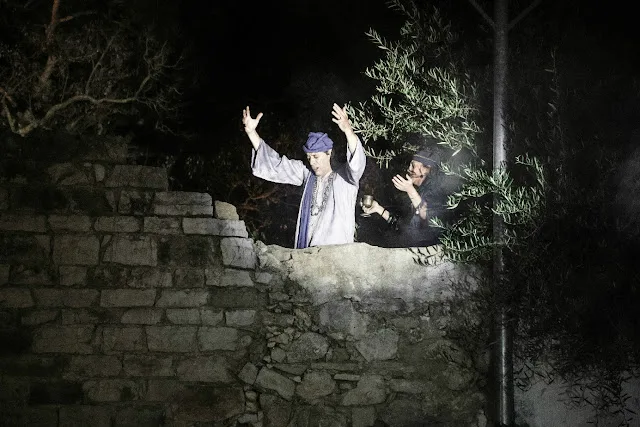
Up at the castle, there’s another story. On the night of São João (June 23), some say a Moorish girl — a Moura Encantada — appears on the wall, brushing her hair under the moonlight. She’s waiting for someone to break her spell. It’s one of many old legends about enchanted women said to guard treasure or memory. Whether it’s true or not, locals still glance up when the night is quiet and the moon is full.

In the 13th century, seven Christian knights were ambushed and killed near Tavira during a reconnaissance mission. When their riderless horses returned, the Christian army launched an attack and reclaimed the town. The Church of Santa Maria do Castelo was later built on the site of the old mosque, and legend says the knights are buried beneath it — though no one knows for sure. To this day, their memory is honored in stone, shadow, and story.

Just outside Tavira, near Conceição, there are stories of pine groves where spirits are said to walk at dusk. Some believe they look after the animals, especially the chameleons that live here — quiet, watchful, and always changing.

The sea has its stories, too. Fishermen tell of a sea-spirit who sings in the Ria Formosa on foggy mornings — part woman, part wave, still searching for a lost love. Some say she brings luck. Others just nod, leave an offering, and head out to sea.

And in nearby Santa Luzia, famous for its octopus boats, there’s talk of strange journeys. Boats drift off course, only to return full of fish — as if someone, or something, guided them back.

You won’t find these stories on signs or in museum displays. But they’re still part of Tavira — in a quiet gust of wind, in the stillness of the river, or in the way the old bridge catches the light at sunset.

Some say the past is gone. In Tavira, it’s just a little harder to spot — but never far away.

The Salt Pans of Tavira: A Timeless Tradition Shaped by the Sea

Just beyond the town walls and coastal dunes, the salt pans of Tavira stretch out like shimmering mirrors. These historic salt flats are more than a picturesque backdrop — they are part of an age-old tradition that has shaped the local economy and landscape for centuries.

Salt production in Tavira dates back to Roman and Moorish times. The region’s abundant sunshine, shallow lagoons, and favorable winds made it ideal for harvesting sea salt, a process still largely done by hand. Tavira’s flor de sal, the delicate top layer of salt crystals, is highly prized by chefs and gourmet shops across Europe.

Today, the salt pans are not only an important economic activity but also a haven for birdlife and a place of tranquility. Walking through the salt flats can feel like wandering a maze of quiet, sun-soaked paths between shallow pools. The best time to witness salt harvesting is during the hot summer months, from June to September , when workers scrape the salt by hand from the evaporating basins. They usually don’t like to be photographed, though so please mind their privacy.

Walking Routes and Navigation

The salt pan area can be disorienting for first-time visitors, with its crisscrossing levees and water channels. To navigate more easily, we recommend using walking apps like Komoot or AllTrails , which provide user-mapped gravel paths and loop routes. Google Maps works as well but can miss the finer details of smaller walking trails.

For a walk directly from Taste Tavira AL , try heading southeast via Fonte Salgada , just past the local fire station (Bombeiros), and follow the gravel trails along the Ecovia Litoral. It’s a peaceful and scenic route — especially in the early morning or around sunset.

Salinas do Grelha & the Algarve’s “Dead Sea”

For a deeper dive into the world of salt, consider visiting the Salinas do Grelha , located near Olhão. This small-scale artisanal producer offers guided tours of their working salt pans. One of their most unique features is the “Mar Morto” — a man-made saltwater lagoon with salinity levels similar to the real Dead Sea. Visitors are welcome to float, relax, and enjoy the health benefits of the highly concentrated saltwater.

Salinas do Grelha – Visitor Info:

  • 📍 Address : Cova da Onça – Belamandil, Cx. Postal 412A, 8700-172 Olhão
  • 📞 Phone/WhatsApp : +351 967 753 496
  • 🌐 Website : www.salinasdogrelha.pt

Tours are available during the high season, and floating in the saltwater lagoon is possible by appointment. The best time to visit is late afternoon, when the setting sun paints the flats in golden tones.


Whether you’re a lover of history, a curious foodie, or simply seeking a peaceful walk through a unique coastal landscape, Tavira’s salt pans offer a window into one of the Algarve’s most enduring traditions — and a reminder of the quiet beauty found in slow, deliberate craft.

Faro – History and Hidden Corners in the Capital of the Algarve

Often overlooked in favour of beach towns, Faro is the cultural and administrative heart of the Algarve — and absolutely worth a visit. While its airport may be most travellers’ first glimpse of the region, Faro is far more than a transit point: it’s a city steeped in history, charm, and quiet sophistication .

Best of all, Faro is easily accessible by train from Taste Tavira AL . The charming Tavira train station is just a five-minute walk (400 metres) away. From there, you can enjoy a scenic 40-minute ride through the eastern Algarve’s countryside straight into Faro’s historic centre — relaxed, car-free, and affordable.

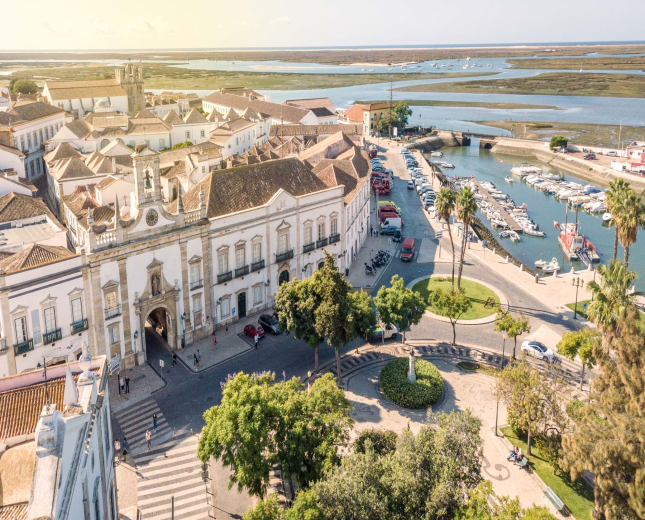
Begin in the Cidade Velha , the old walled town. Enter through the neoclassical Arco da Vila and step into a cobbled world of ancient churches, peaceful squares, and Roman ruins. The cathedral (Sé) , with its mix of Gothic, Renaissance and Baroque features, offers a climbable bell tower with sweeping views over the Ria Formosa lagoon .

Speaking of the lagoon — Faro is also a gateway to nature. The Ria Formosa Natural Park is right on the city’s doorstep, offering boat tours, birdwatching (keep an eye out for flamingos), and a chance to visit island beaches like Ilha Deserta or Ilha do Farol .

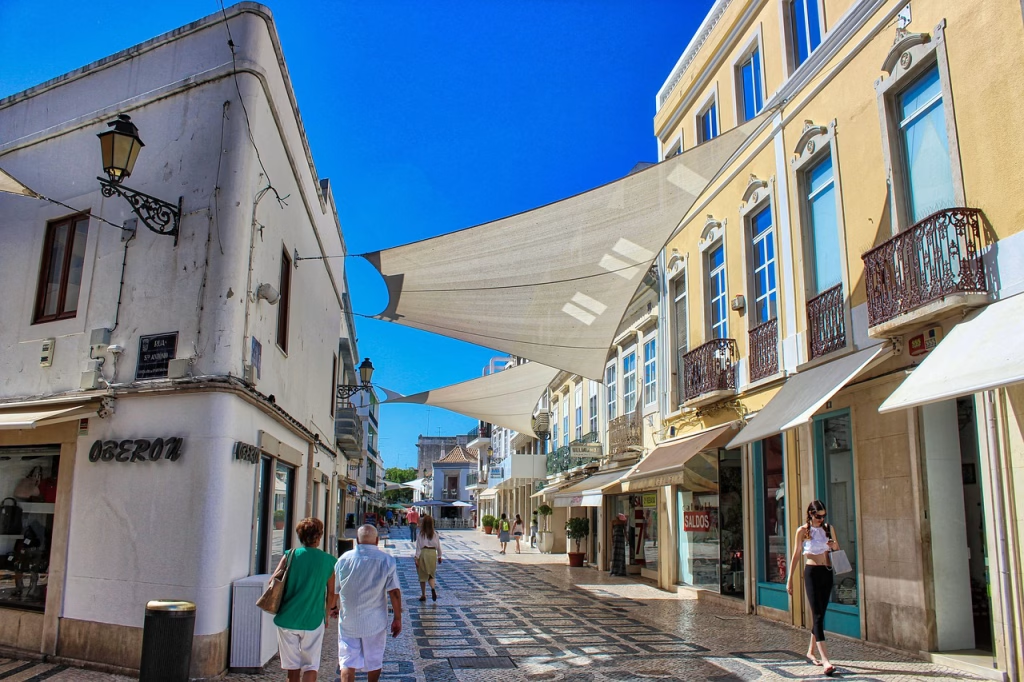
Faro has a distinct, low-key elegance, with museums, art galleries , and a lively local dining scene. Don’t miss the haunting Capela dos Ossos (Chapel of Bones) inside the Carmo Church, a striking reminder of the region’s Catholic heritage. For something lighter, grab lunch at one of the many modern bistros or traditional tascas , and enjoy a stroll along the marina before heading back to Tavira.