Faro – History and Hidden Corners in the Capital of the Algarve

Often overlooked in favour of beach towns, Faro is the cultural and administrative heart of the Algarve — and absolutely worth a visit. While its airport may be most travellers’ first glimpse of the region, Faro is far more than a transit point: it’s a city steeped in history, charm, and quiet sophistication .

Best of all, Faro is easily accessible by train from Taste Tavira AL . The charming Tavira train station is just a five-minute walk (400 metres) away. From there, you can enjoy a scenic 40-minute ride through the eastern Algarve’s countryside straight into Faro’s historic centre — relaxed, car-free, and affordable.

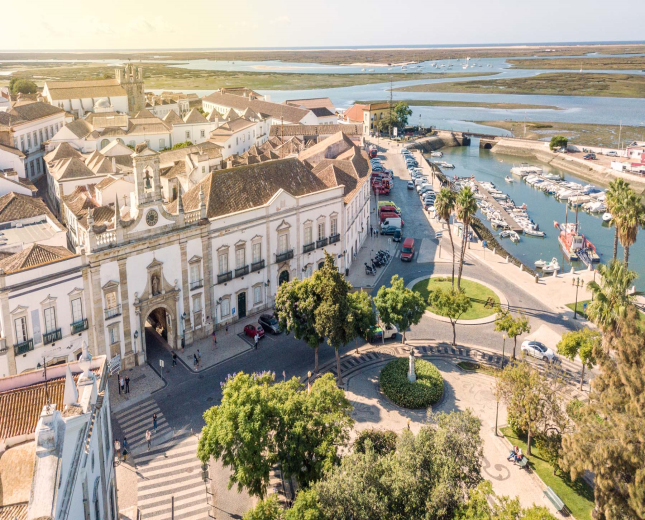
Begin in the Cidade Velha , the old walled town. Enter through the neoclassical Arco da Vila and step into a cobbled world of ancient churches, peaceful squares, and Roman ruins. The cathedral (Sé) , with its mix of Gothic, Renaissance and Baroque features, offers a climbable bell tower with sweeping views over the Ria Formosa lagoon .

Speaking of the lagoon — Faro is also a gateway to nature. The Ria Formosa Natural Park is right on the city’s doorstep, offering boat tours, birdwatching (keep an eye out for flamingos), and a chance to visit island beaches like Ilha Deserta or Ilha do Farol .

Faro has a distinct, low-key elegance, with museums, art galleries , and a lively local dining scene. Don’t miss the haunting Capela dos Ossos (Chapel of Bones) inside the Carmo Church, a striking reminder of the region’s Catholic heritage. For something lighter, grab lunch at one of the many modern bistros or traditional tascas , and enjoy a stroll along the marina before heading back to Tavira.
History and Heritage: Tavira’s Churches and Museums

Tavira may be a beach lover’s paradise, but for those who seek history, architecture, and cultural depth, it’s equally rewarding. This charming town is home to more than 20 churches, several small but fascinating museums, and centuries of well-preserved history waiting to be explored.

Igreja de Santa Maria do Castelo – Echoes of the Knights

Located next to the castle ruins, this imposing white church stands on the former site of a mosque and is one of Tavira’s most important religious buildings. It houses the tombs of seven knights of the Order of Santiago, linking it to the Reconquista and Christian conquest of the Algarve. The large clock tower and peaceful cloister garden offer a tranquil break in the heart of town.

Igreja de Santiago – Pilgrimage Begins Here

Also near the castle, the Igreja de Santiago is more than just a beautiful church — it is the starting point of the Caminho Nascente , one of the lesser-known Portuguese pilgrim routes to Santiago de Compostela. Dedicated to St. James (Santiago) , the patron saint of pilgrims, the church holds special significance for those embarking on this spiritual journey. The route stretches northward through Alentejo and beyond, connecting Tavira with one of Europe’s most important religious destinations.

Igreja da Misericórdia – Blue and White Glory

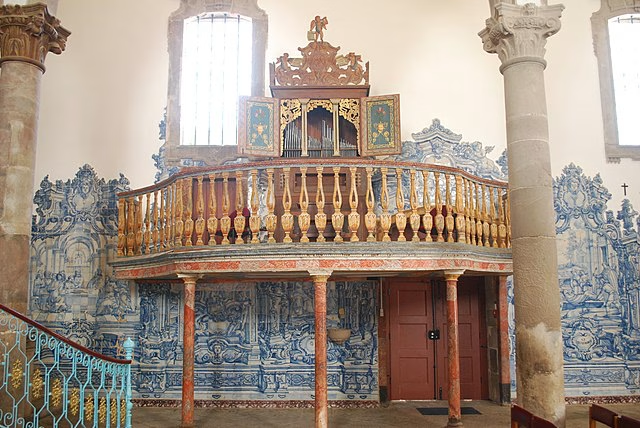
Perhaps Tavira’s most beautiful church interior, the Igreja da Misericórdia near the Praça da República showcases 18th-century blue-and-white azulejo tiles depicting scenes of charity and compassion. The carved stone portal is a fine example of Renaissance architecture, and the small fee to enter is well worth it.

Núcleo Museológico Islâmico – Islamic Roots

To understand Tavira’s layered history, stop by the Islamic Museum , located inside the Palácio da Galeria. It offers insight into the town’s Moorish past and includes archaeological finds like the famous Tavira Vase. This museum is part of the broader Museu Municipal de Tavira , which includes several small exhibits across the city.

Palácio da Galeria – Art and Archaeology

Housed in an elegant 16th-century palace, the Palácio da Galeria hosts rotating contemporary art exhibitions as well as permanent displays on Tavira’s Roman and Islamic past. The building itself is worth the visit — don’t miss the underground cistern and mosaic fragments.

A City of Quiet Corners

Walking through Tavira’s cobbled streets, you’ll find smaller chapels, bell towers, and convent ruins, each with its own story. Whether you’re a devout traveler, a culture seeker, or a lover of beautiful architecture, Tavira offers a quietly rich experience away from the typical tourist paths.