Top 5 Secluded Beaches Near Tavira for a Peaceful Day Out

Let’s be honest—Tavira’s beaches are no secret. But if you’re like me and crave a little more space, a bit more serenity, and maybe the chance to hear your own thoughts while watching the waves… then this post is for you.

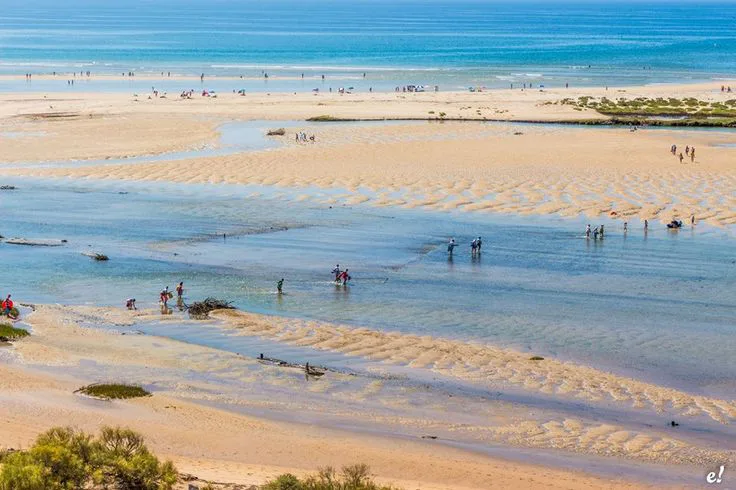
Here are my top 5 secluded beaches near Tavira where you can escape the crowds, dip your toes in the Atlantic, and spend a peaceful day in nature. Just you, the sand, the sea, and maybe a few seashells for company.

1. Praia da Terra Estreita – The Barefoot Escape

Hidden between the busier Barril and Ilha de Tavira beaches, Praia da Terra Estreita is a true gem. You’ll need to hop on a seasonal water taxi from Santa Luzia (it runs spring to early autumn), but that’s half the fun.

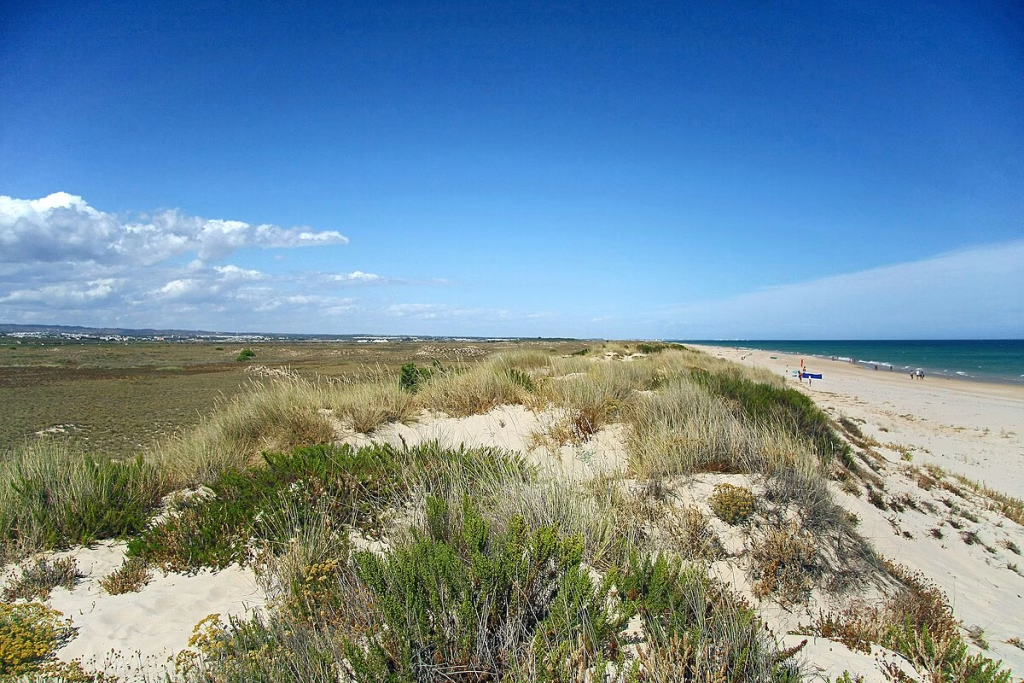
What awaits? A blissfully quiet strip of golden sand, dunes rustling in the wind, and water so clear it feels like the Algarve 50 years ago. Bring your own snacks and plenty of sunscreen—there’s only one seasonal beach bar and zero loud music. Just the way we like it.

How to get there: Water taxi from Santa Luzia (April–October)


2. Fuseta Island Beach – Local Vibes Only

Fuseta is a working fishing town with a laid-back vibe, and its offshore island beach is perfect for escaping the mainland hustle. Ilha da Fuseta is reachable via a quick summer ferry or private water taxi , and once you’re there, it’s peace and quiet all the way.

This is where locals go to breathe. No beach clubs, no inflated prices—just white sand, turquoise shallows, and the salty scent of sea breeze.

Tip: Go mid-week and you might have entire stretches to yourself.

How to get there: Ferry or water taxi from Fuseta (summer season)


3. Ilha de Tavira (Western Stretch) – 14 Kilometers of Solitude

Most visitors get off the ferry at Praia de Tavira , grab a cocktail, and settle in. But here’s a secret: if you head west along the shore , the further you walk, the fewer people you’ll see. After a 20-minute stroll, it’s just you, the Atlantic, and maybe a lone fisherman in the distance.

This stretch of 14 km of unspoiled beach leads all the way to Praia do Barril—if you’re feeling adventurous, keep walking. Or just find your perfect spot and set up camp for the day. No roads, no cars, no worries.

How to get there: Ferry from Tavira, then walk west


4. Manta Rota Beach (Western Edge) – The Long Walk to Silence

Manta Rota itself is a family favourite, but if you walk westward along the beach , something magical happens. The crowds thin, the dunes rise, and suddenly you’re in another world. Keep going and you’ll reach the pristine shores near Cacela Velha , with its legendary views and clear waters.

You’ll pass hidden coves, tidal pools, and possibly a few other peace-seekers—but not many. This is the kind of beach walk that clears your head and fills your camera roll.

Pro tip: Time your walk with the tides—at low tide, it’s a dream.

How to get there: Park at Manta Rota and walk west


5. Praia do Lacém – The Untouched Secret

Tucked between Cabanas and Cacela Velha lies Praia do Lacém , one of the Algarve’s most peaceful and untouched beaches. It’s not accessible by road, and that’s exactly what keeps it so wonderfully quiet.

To get there, hop on a taxi boat from Cabanas —many of the same boats that cross to Cabanas Island will also take you a little further east to this off-the-map location (just ask the skipper). What you’ll find is a wide expanse of soft sand, dunes, and barely another soul in sight.

There are no facilities here—so pack water, snacks, and everything you need. What you get in return? Silence. Space. And that delicious feeling of discovering a beach that feels like it’s yours alone.

How to get there: Water taxi from Cabanas (ask for Praia do Lacém)


Final Thoughts

Tavira may be getting more popular, but serenity is still out there—if you’re willing to walk a little, wait for a boat, or veer off the tourist path. These five secluded beaches are all within easy reach of town but feel like another world entirely.

So pack a picnic, grab your hat, and go find your own little slice of Algarve paradise.
Discover the Mystical Milreu Ruins Near Estoi: A Hidden Roman Gem Just a Short Drive from Tavira!

When you think of the Algarve, you probably imagine sun-drenched beaches and charming fishing villages. But hidden just a half-hour drive from Tavira lies an incredible treasure trove of history that most visitors overlook: the Milreu Roman Ruins near Estoi . This archaeological site offers a fascinating glimpse into the luxurious life of a Roman villa that once thrived here almost 2,000 years ago — and it’s easier to reach than you might think.

🚗 How to Get There: A Scenic Drive from Tavira

Milreu is conveniently located near the quaint village of Estoi, about 25 kilometers west of Tavira , making it the perfect destination for a half-day trip by car. The journey takes you through rolling hills dotted with vineyards, almond trees, and orange groves — a true taste of rural Algarve. Follow the signs from Estoi to the archaeological site, where ample parking is available right at the entrance.

🏛️ Step Back in Time: What You’ll Discover at Milreu

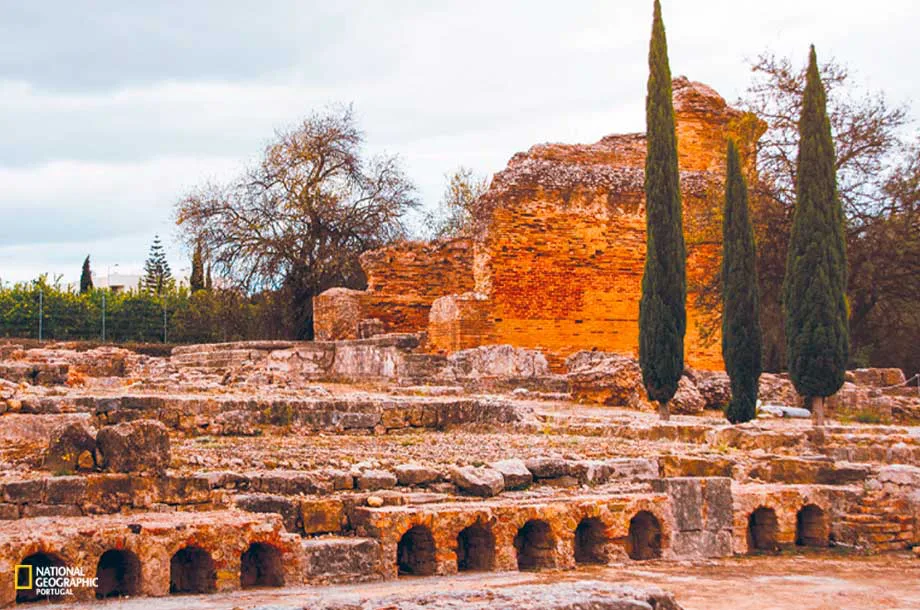
The site of Milreu was once a sprawling Roman villa complex , believed to date back to the 1st century AD. This was not just a simple farmhouse — it was a luxurious rural estate that reflected the wealth and sophistication of its owners.

Mosaic Floors: Art That Has Survived Two Millennia

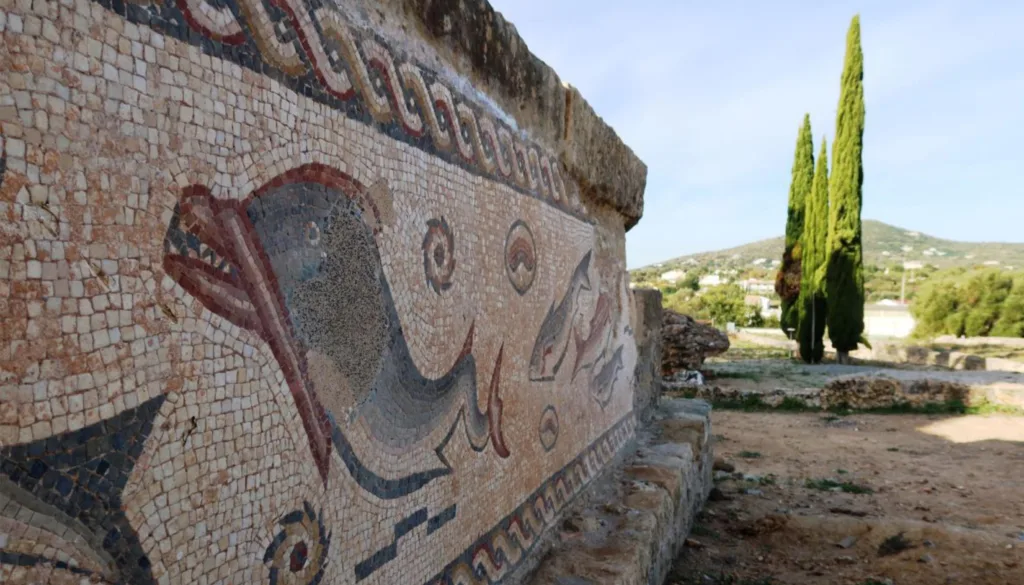
One of the standout features of Milreu is the exquisite mosaic flooring , remarkably well-preserved despite the passing centuries. These mosaics display intricate geometric patterns, mythological creatures, and scenes inspired by classical Roman mythology, offering a colorful window into ancient artistry and daily life.

Thermal Baths: Roman Comfort in the Countryside

Milreu also boasts thermal baths , an essential feature of Roman villas where owners and guests would relax and socialize. Walking through the remains of the bathhouse, you can imagine the soothing warmth of the heated rooms and the importance of these spaces in Roman culture.

The Pagan Temple: A Spiritual Center

Among the ruins, archaeologists discovered a small pagan temple , highlighting the religious practices of the villa’s inhabitants. The temple’s remains hint at rituals and ceremonies once performed here, adding a mystical layer to the site’s history.

🌿 Explore Estoi Village: Beyond the Ruins

After your archaeological adventure, take time to wander the charming village of Estoi itself. Known for its spectacular rococo palace (Palácio de Estoi) with its pink façade and stunning gardens, Estoi offers a peaceful retreat with cozy cafés and artisan shops. Don’t miss stopping at a local bakery for a fresh pastel de nata or a cup of rich Portuguese coffee.

🔎 Insider Tips for Your Visit

  • Visit early or late in the day to avoid crowds and enjoy soft, golden light for photography.
  • Wear comfortable shoes ; the site is uneven in places and best explored on foot.
  • Bring water and sunscreen , especially in summer, as shade is limited.
  • Combine your visit with a stop at nearby Fonte de Estoi , a historic spring with crystal-clear water that once supplied the villa and the village.

🌟 Why Milreu Should Be on Your Algarve Bucket List

Milreu is more than just ruins — it’s a captivating story carved in stone, a rare chance to connect with the ancient past right here in southern Portugal. Whether you’re a history buff, a culture lover, or simply curious, this site offers an immersive, peaceful escape from the usual tourist trail.


Ready to uncover Milreu’s secrets?

Hop in your car, follow the winding roads to Estoi, and step into a Roman world filled with mosaics, myths, and memories. Your Algarve adventure just got a whole lot richer.

Moorish Waterwheels in Tavira: History, Hidden Trails & a Local Gem Near Taste Tavira AL

You may walk past one without noticing. A rusted wheel, half-buried in bougainvillea, wooden buckets barely holding on, and a mysterious circular track on the ground. Yet what you’re seeing is part of an ancient irrigation system — a nora, or Moorish waterwheel — that has quietly shaped the Algarve landscape for centuries.

These beautiful relics from Islamic Iberia are more than a curiosity. They are a reminder of Tavira’s layered past, its agricultural genius, and its connection to the rhythm of water and land. And the best part? One of them is hidden just 50 metres from our front door at Taste Tavira AL .


🏺 From Al-Andalus to Algarve: The Origins of the Nora

The nora (from Arabic: ناعورة na‘ūra) was introduced to the Iberian Peninsula during the Moorish period, between the 8th and 13th centuries, when Islamic rule flourished in the Algarve. The Moors brought with them advanced water management techniques — from terraced farming to cisterns, and of course, waterwheels.

Unlike vertical mills used for grinding grain, the nora is a horizontal irrigation system. Powered by animal strength — typically donkeys, mules, or oxen — the wheel turned continuously, lifting water from a well via a loop of clay or wooden buckets.

Technical detail:
Each turn of the wheel could lift several litres of water from as deep as 10 meters and even more, spilling into aqueducts that distributed the water across terraced fields of figs, carob, almonds, and olives.

Many of these systems remained in use well into the 20th century. Today, most stand still — silent witnesses to a time when water, not Wi-Fi, was the most precious resource.


🧭 Discover a Waterwheel Near Taste Tavira AL

Right at the corner of Rua Maria de Lurdes Braga Teixeira and Rua de Santo Estêvão , you’ll find a small, hidden gem: a complete nora with its original donkey wheel, gear system, and even the wooden buckets still intact . I discovered it on a quiet morning walk, and now it’s a stop I recommend to every curious guest.

It’s tucked against a white wall, just behind some garden fencing — easy to miss if you’re not looking. But once you spot it, you’ll see the full mechanism: the gear cogs, the track where the donkey walked, and even the faded wood where hands once repaired the rig.

Another small wonder lies just down the road, in Rua Manuel Virgínio Pires , on the small square that leads to the “Secret” restaurant of Jorge and Lia . Here, a deep Moorish-style well reminds us of the silent systems that sustained entire communities — cool water, drawn by hand or beast, in the hot Algarve sun.

These waterwheels weren’t just about function — they were engineering landmarks. The wheel at the highest point of the backland trails likely served several small farms. Water flowed by gravity to lower fields, guided by narrow stone channels still visible if you venture off the main paths by foot or by bike


By Bike or Car: Spotting Wells Across the Landscape

As you drive or cycle through Tavira’s rural backroads keep your eyes open: water wells are everywhere . Dotted across farmland, tucked between citrus trees or hidden behind crumbling stone walls, these stone-ringed wells are a quiet but powerful sign of the Algarve’s agricultural soul.

Many of these wells are dry now, but they remain — in circles of stone, rusted pulleys, and the occasional crank still intact — a kind of archaeological poetry in plain sight . Whether on foot, bike, or behind the wheel, it’s a slow adventure of looking closely and letting the land tell its story.


🌿 Why These Waterwheels Still Matter

In today’s age of apps and automation, it’s humbling to see how water was lifted, bit by bit, using nothing more than gravity, animal power, and ingenuity. These systems shaped Tavira’s fertile valleys and made year-round farming possible in a sun-baked region.

They are also architectural hybrids : a blend of Roman engineering and Arab design. You’ll find them nowhere else in Europe quite like this.


📸 Photo Suggestions for Your Facebook or Insta

  • Detail shot of the rusted gear teeth
  • The turning circle where the donkey walked
  • Side-by-side comparison: modern pump vs nora
  • Old map overlay of irrigation systems
  • Soft light silhouette with bougainvillea background

✨ Final Thought

So next time you’re in Tavira Tavira AL, pause beside that old wheel. Feel the sun on your back, the quiet buzz of insects in the dry air — and listen, just maybe, for the echo of hooves and the splash of water in motion. The noras may have stopped turning, but their story is still flowing.

Tavira: A Spiritual Journey Through Time

Faith, Reconquest & Sacred Spaces

Tucked into Portugal’s eastern Algarve is the town of Tavira , where faith and history walk hand in hand. With roots reaching back to Phoenician and Roman eras, this riverside town became an essential Christian stronghold after the Reconquista—and churches sprang up like wildflowers. Tavira once had around 30–36 sacred buildings , keepers of stories layered in centuries.

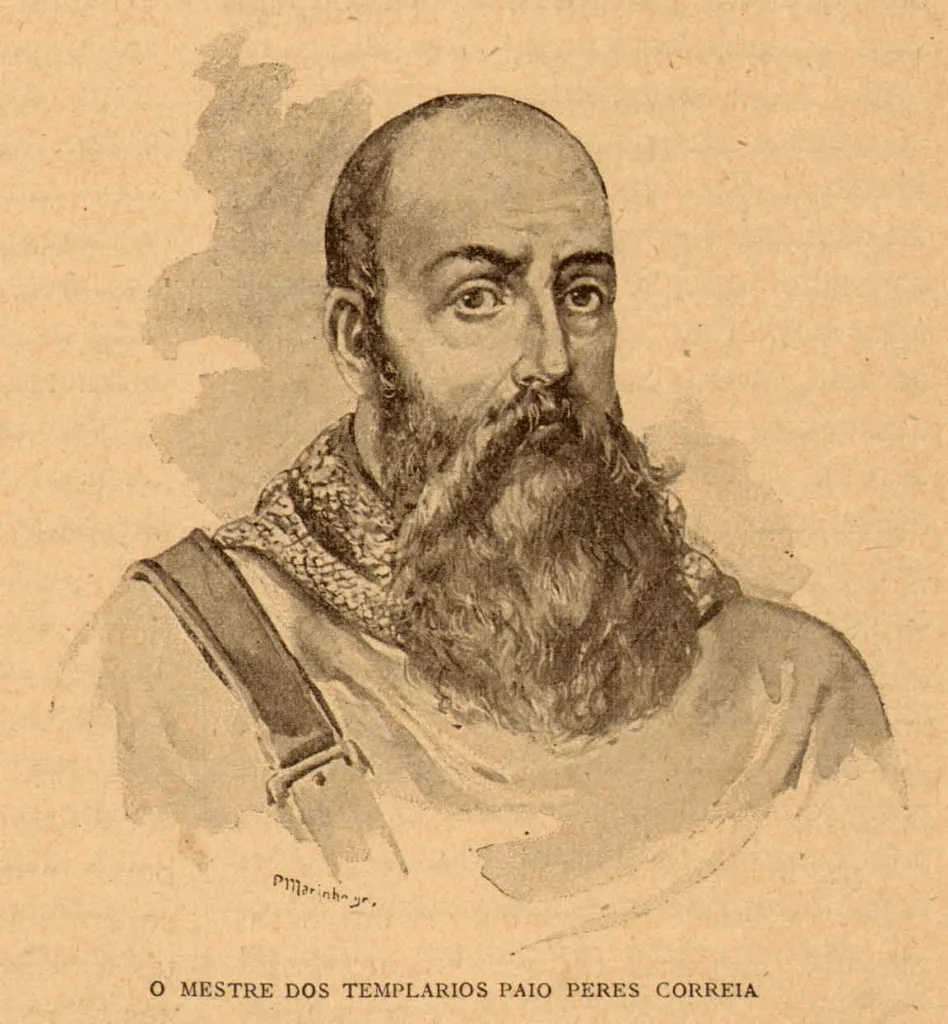
Among them, the most haunting may be Igreja de Santa Maria do Castelo . After Tavira was retaken in 1242 by Dom Paio Peres Correia and the Order of Santiago, a Gothic-style church rose from the ashes of a former mosque. According to local tradition, the remains of Correia and seven knights who died in battle rest inside, though historians debate the exact truth.

Then there’s Igreja da Misericórdia , built in the mid-16th century under the guidance of Renaissance architect André Pilarte (who also worked on Lisbon’s Jerónimos Monastery). The façade is a Renaissance gem; the interior dazzles with blue-and-white azulejo panels illustrating the 14 Works of Mercy, alongside carved saints and angels.

Beyond these major sanctuaries, Tavira’s religious life was shaped by a network of brotherhood chapels —such as the Ermidas of São Sebastião and São Roque, each representing civic, military, or trade groups. Though many fell into decay, their embedded stories still survive in stone and memory.


The Parishes, the Paths & Moorish Echoes

With its 21 churches under the main parish—and more belonging to brotherhoods and civic institutions—Holy Week in Tavira bursts with pilgrims, procession, and history, much of it visited from the riverbanks of the Gilão.

The parish of Santa Maria e Santiago holds much of this heritage. Igreja de Santiago , for example, stands near the castle and serves as the starting point of the Caminho Nascente—a pilgrim route to Santiago de Compostela, linking Tavira spiritually with broader European tradition.

On a deeper level, Tavira’s urban fabric still whispers of its Moorish past . The winding alleyways, flat‑roofed houses, horseshoe arches, twinned chimneys, and tile patterns echo an Islamic Medina that thrived here until the Reconquest in mid‑13th century. Several small museums and archaeological finds—including the famous “Tavira Vase”—attest to this layered legacy.

The Islamic Museum (Núcleo Museológico Islâmico) , housed in the Palácio da Galeria in the town centre, is a quiet beacon of that history: displaying ceramics, fragments, and daily‑life artefacts that remind us how deeply Moorish culture shaped this corner of the Algarve.


Why All These Churches?

So—why did Tavira need so many churches ? The town’s strategic importance during the 16th‑century Age of Discovery made it a spiritual hub. Religious orders, charities, municipal councils, and trade fraternities all erected their own sacred spaces. The town’s reputation as the “City of Churches” grew not just out of devotion, but civic structure, identity, and social life.


Final Thoughts

As you stroll across the elegant seven‑arched Gilão bridge —mythically called “Roman,” but likely rebuilt by the Moors—you’re walking between eras. Tavira is where Moorish streets meet Christian cathedrals , and the pilgrim path coexists with the daily now. Each chapel, each tile panel, each faded tomb is a thread in the story of a town shaped by faith, conquest and community.

Even if you just look out upon the cathedral towers rising behind azulejo‑draped rooftops, you can feel that Tavira isn’t just a place—it’s a town layered with history .


Credits & inspiration : This post draws on historical insights from Portugal Resident’s “The Religious History of Tavira – Part 1” and “The Parishes of Tavira – Part 2,” supplemented by archival and travel sources such as municipal and heritage records, and recent local‑history accounts